Prasanta Chakravarty
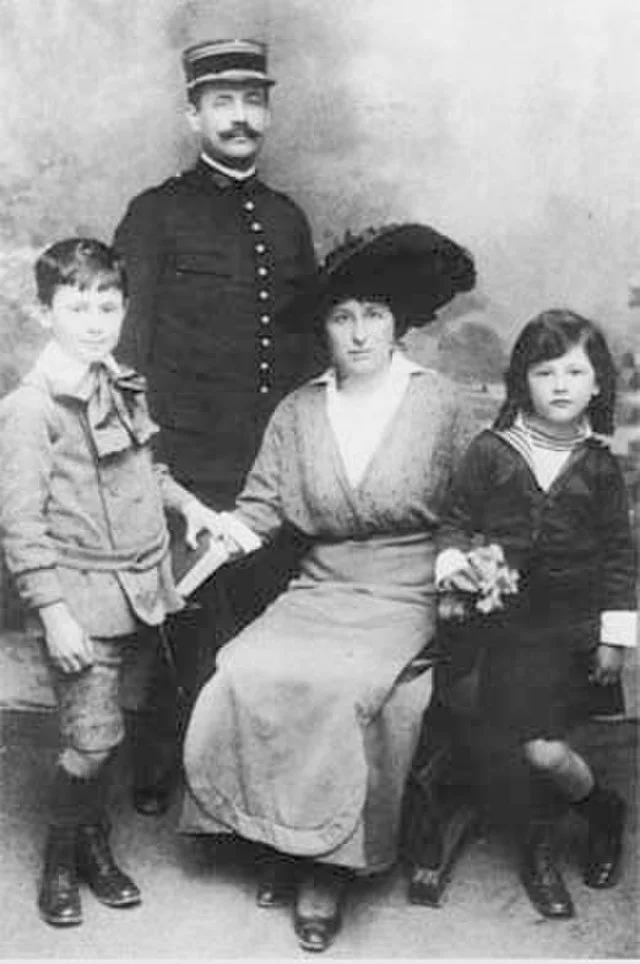
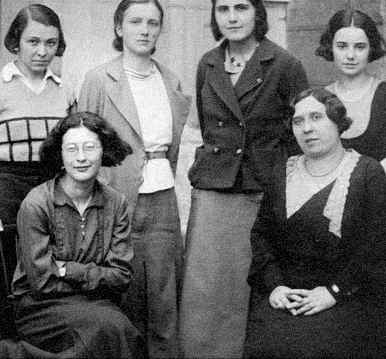
On August 4, 1943, a few days before her death and amidst war, Simone Weil began to describe to her parents, Selma (Mime) and Bernard Weil (Biri), from her little room in London, about the working conditions and daily life of her Cockney cleaning girl. Weil’s last few months in London are all about pubs in working class neighbourhoods, Sundays at Hyde Park, watching people and listening to orators and living in a cheap room (though absolutely satisfactory and suitably furnished). Weil worked in a small office at 19 Hill Street in London doing desk analysis of resistance reports. She calls her world pure Dickens. But unlike Dickens, she refuses to be sentimental with the humble people of England. She wonders why often faithfully and consistently depicting reality rings false? What exactly may lie underneath reality?
The cleaning girl ‘takes care of herself with the boys’ and goes to the pub on Sunday mornings. She thinks war as bombs landing on her and “doesn’t have two ideas in her head, or rather not a single one” (Weil, 2024). And then Weil makes a double leap, but her leaps of thought always have some internal logic. First, a general comment about English people around her: “For dessert, people here sometimes eat strained apple compote without mixing anything else in, the way we do” (Weil, 2024). Such mixtures, she tells us, are called “fruit fool” and she finds the name delightful. It is from here that she jumps straight into her famous lines about Shakespearean fools—for the mixtures lie by making the consumers believe they are fruits while Shakespeare’s fools tell unadorned truth, following the visionary tradition.
That the latter always pronounce unmitigated truth is not because they are sentimental but because they are tragic. And their tragedy lie (she concentrates on Lear) in the fact which Weil has been telling us all her life in many different ways: “In this world, only people who have fallen to the lowest level of humiliation, far below begging, not only without social consideration, but regarded by all as devoid of that primary human dignity of reason—only those people actually have the possibility of speaking the truth. All the others lie.” (Weil, 2024). They tell us plain and simple truth: “Pure truths, unadulterated, luminous, profound, essential.” She further adds that all her certificates and ‘intelligence” mean little when compared to the utterances of the fools and she would rather prefer their label.
Degradation and abasement beget stigma. Those who lack material means and rational space to put their case forth just do not matter. This is not just a fact of medieval Europe but has actually taken new forms in modern living. Life is still dictated by structural subjugation which is invisible, extreme material scarcity, poor sanitation, and constant vulnerability to workplace debasement, community cancelling as well as to natural calamities like flood and earthquakes, disease and pandemic. And what about the widows, orphans, the elderly and the disabled in the small towns, kasbahs and villages of India? Even in the suburbs. Charity is hardly forthcoming; humiliation is. Everything is collateral damage. These are the people completely stripped of their social status. She calls such a state affliction.
Such people lose all illusions—they can clearly see the false masks that make the social possible. Besides, the outcasts do not have to protect their social image. In the subcontinental tradition, such fools have certain variants—simpletons who blurt out unpleasant or unadorned truth, the wise renouncer who do not care about polite norms but can see the deeper truths of life, the vidhushaka (witty jester) who, alongside comic relief, questions power, moral hypocrisy or human flaws, and so on. But Weil is referring to a class of people who have been ousted by society and who have therefore been able to regain natural ability or power to say things that go beyond the pail of dignified or polite utterances. It is not acquired wisdom or thoughtfulness or jest. It is as if some kind of shining truth flashes in front of their eyes.
We may have encountered one or two people of this kind in our lives. They may have already been nurturing a certain kind of unadorned seriousness and plain directness about them. That streak exacerbates owing to the tense political climate of our times and by the personal cost that such partisan times always extracts from individuals caught in the turmoil. Bad things happen because bad things happen. It is the same for good things. Nevertheless, the unsavoury nature of tumult and commotion elicits various kinds of reactions from people—stoic, retributive, or resignation perhaps? Some people are galvanized by adversity—they turn around and get back to life with fresh energy. All kinds of permutations emerge.
I have known a young woman in Rohtak, through a celebrated Hindi poet friend, who has worked all her life tirelessly for local progressive causes and particularly in attending to women’s plight in that part of the semi-urban world. Deliberations and reason do not function in that universe in the way we usually expect them to do. It is a secretive world. The chain of social command is in place. Shrouded and lethal in a petrified traditional morass. The language of rights and equality are completely alien. Each step of progress is often balanced by counter-regressive inertia. Tenacity is the key, and yet failure is almost inevitable, for those who wish to bring about any change to the people around themselves. The repeated ordeals that the woman had to undergo cannot be adorned with adjectives. From her own family members and from other community people—physical, financial and psychological. She is herself a fighter, within and without; and a self-reflective person—no way easily triggered by whatever happened to her or others in her cohort. But the ordeals have made her a different being—chiselled with debasement and yet full of shining incandescence, materially completely present in every act that she does and yet almost other-worldly in her comportment. You can feel how truth throbs, with a quiet resolve. Everything seems normal—eating, watching a film, doing the chores. But underneath, a terrifying sense of obligation to the debased burns quietly. That obligation to the other becomes second nature. It is difficult to distinguish between pain and pleasure in whatever she does.
A few years ago, I had come in contact with another intelligent young man from the Eastern part of India, who had been shunned by his cohort. For good. The socially cultured herd—’people-like-us’, decided one day that he was different from them—too quirky and too natural, does not share their social or political views and keeps to himself. His proud independence would not be tolerated. In times of turmoil, defensive cabals and echo-chambers become a way to survive. Such niches of identity are also places of intolerance. These groups work through radical suspicion of anything or anybody that does not resemble the ‘already understood’ ethos of the clique. So, he was turned into an outcast, ridiculed and humiliated for being profligate, capacious and friendly. Mercilessly trolled on social media. Gradually, all the fora where he used to write earlier or freely join discussion began to quietly eschew him. Local clubs and gyms stopped entertaining him. Gradually, other contacts began to fade away. He attempted maintaining composure and tried out different things. Nothing worked. The news spread. He did not get admission in higher education programmes and could not even bag odd jobs, though no one ever told him why such a thing was happening with him. His physical condition began to deteriorate. And the mind often turned clouded and numb. At one point, he had to scavenge in order to barely survive. There was no comforting ear to share his plight. It was pure affliction. Force of gravity, to refer to Weil. It is in such a condition of numbing despair that he realized the essential worth of living. Everything turned crystal clear. In each new encounter he was at once deeply personal and completely dispassionate. He would speak little, but when he did, each word came out as an aphorism. Or a golden riddle sometimes. Only the discerning could see that they were encountering a man well ahead of his years. They could feel that here was a man who is close to having a true measure of things around him. That moment arrived gradually. It was not exactly wisdom, but the realization that there are things beyond wisdom and argument. But his world was no longer the same. Some people are made to pass through conditions of living hell so that they become pure gold. Others perish. Bit by little bit, what was a young body and mind once, had turned himself into the witness, the knower of the field—kshetrajna.
But the danger with such illuminated souls—those who have lost all social illusions and are able to have a true measure of things, is that their prophetic sense and unadorned honesty can also turn into a liability. How can such clarity of vision be a liability? The point is that to be lucid is not necessarily to be full of insights. Often, we see that a clear sense of truth can gradually turn ossified and one-dimensional. Righteousness cuts both ways. The vision of life turns moral and merciless. Consequently, the very selflessness of such people can gradually take them away from life’s variegated splendours and make them dour. Spareness becomes a project. They begin to get consecrated—by others, and then by their own beliefs. The sense of lightness begins to fade away and they soon start to resist the contingent wonders of the world as frivolity. But to partake in life’s wonders does not mean fulfilling one’s desire or being ambiguous about one’s philosophical or political positions. Weil risks such a position: Trotsky dismissed her as a melancholic revolutionary and Charles de Gaulle thought her craziness was utterly impractical. Iris Murdoch, otherwise an ardent Weil acolyte, also found her to be unbalanced and inaccurate. Susan Sontag, while appreciating her seriousness, thought that no one who loves life should imitate Weil’s path towards self-destruction and martyrdom. Weil’s harsh condemnation of Judaism, despite being a Jew by birth, is well known.
In spite of what her critics think, we often see a dichotomy in Weil about living everyday life. She loves life in her own humble way. And yet in swift swings of mood, seriousness of purpose creeps in. During Weil’s final months in England (1942-43), the letters sent to Selma and Bernard Weil are full of details about English life as well as infused with her characteristic mix of tenderness and terseness. In fact, she seems to be liking England a lot and comparing the situation with that in wartime France and New York. For instance, in a letter written in December 31, 1942 [Postmark: January 1, 1943], she writes:
“In a sense, things and people here may appear to me exactly as I think I expected them to, and in a sense maybe better. Somewhere Lawrence defines England with the terms humour and kindness. These are two traits one finds everywhere in the little scenes of daily life and in very different environments—Notably kindness—to a far greater degree than I would have dared to hope. People here don’t argue with each other the way they do on the continent; the same is true where you are, but that’s because nerves are at ease there, whereas here nerves are tense, but are controlled out of self-respect and a real generosity toward others. It’s possible that the war has a lot to do with all that. This country has been subjected to just the right amount of suffering to be fortifying and to awaken latent virtues. Not a hammer blow like France received. Nonetheless, considering all that, it seems certain to me that they are better than us in the current historical period. (It’s true that’s not hard to do)” (Weil, 2024).
There are a couple of significant strands in the aforementioned passage. Foremost is the placing of humour and kindness side by side as something that attracts Weil. What she likes in Lawrence’s description of the English people and which she can now witness firsthand is the fact that humour and kindness can go hand in hand—that is to say, being obligated towards others, which shows kindness, does not mean one cannot laugh or have a sense of humour. The quality of humour for a serious person may be wry or witty or restrained, as in the case of English people that she encounters. But here is one way of avoiding the dichotomy between the honest truth teller (parrhesia) and revelling in and with life itself.
The second is about drawing another contrast between three nations on the basis of the exact impact of war and tumult. In New York, where Selma and Bernard Weil found refuge after fleeing Vichy France, nerves are at ease since war never impacted the city and the country directly. People don’t argue there since nerves are at ease—life goes on robustly. In the continent, people constantly argue—and hence give a pass to both humour and kindness. Perhaps owing to the European mainland ethos? Or maybe the war has impacted it far more devastatingly (Weil’s words: hammer blow). In England, the right amount of suffering has made people awaken their latent virtues and also helped them fortify their inner beings. Nerves are tense in England, and yet, instead of arguing, they control their emotions by taking resort to self-respect and generosity. In times of tumult and distrust, it is very important to seek and practice wit, mutual respect and generosity of the soul, keeping a low key. Only a few can fathom that wounds can be made into permanent scabs which takes whole people into spiralling cycles of retribution, endless argument and cacophony.
In the months leading up to her death, because she could not actively participate in the war efforts and fulfil her ‘inner necessity’, Simone Weil was seeking happiness and amusement in ordinary aspects of life—like eating potatoes! Here is another example from her letter postmarked January 8, 1943 to her parents, who in turn, forwarded it to André Weil:
“Another thing I’d like to be able to describe to you, because it’s a concentrated drop of the pure English spirit in its most delightful aspect, is an exhibition of the Food Ministry entitled Potato Fair, to encourage the public to eat potatoes instead of overseas food. It’s conceived as something for children. There are nursery rhymes adapted to the theme, distorting mirrors showing what becomes of you when you don’t eat potatoes, etc. What strikes me most about this people in its current situation is a good humour that is neither something spontaneous nor something artificial, that comes from a feeling of fraternal and tender comradery in an ordeal shared by all. I’m convinced that in reality, despite the separation of families, the harshness of the work and all the rest, people are in reality happier here than a few years ago, because of that” (Weil, 2024).
The passage is self-explanatory. She enjoys being a child again. The milieu and the mood are striking and homegrown: distorting mirrors, nursery rhymes and potatoes. A day’s enjoyment. Humour arrives out of fraternal and tender camaraderie, which, in the true sense, can only come after certain tests and ordeals are lived through. Is there a pattern of living? Could it be that humans will continue to recover the happiness and lightness of living only after they undergo harshness, separation, distrust and general tumult? Is that what we shall give the name of solidarity?
________________________________
Weil, Simone. A Life in Letters. Edited by Robert Chenavier, André A. Devaux, Marie-Noëlle Chenavier-Jullien, Annette Devaux, and Olivier Rey. Trans. Nicholas Elliott. The Belknap Press of Harvard University Press: Cambridge, Massachusetts & London, England, 2024.
Weil, Simone. Seventy Letters: Personal and Intellectual Windows on a Thinker. Edited by Eric O. Springstead. Trans. Richard Rees. Wipf & Stock Publishers (part of the Simone Weil: Selected Works series, 2015.