
The Child is Given Over to a Stepmother
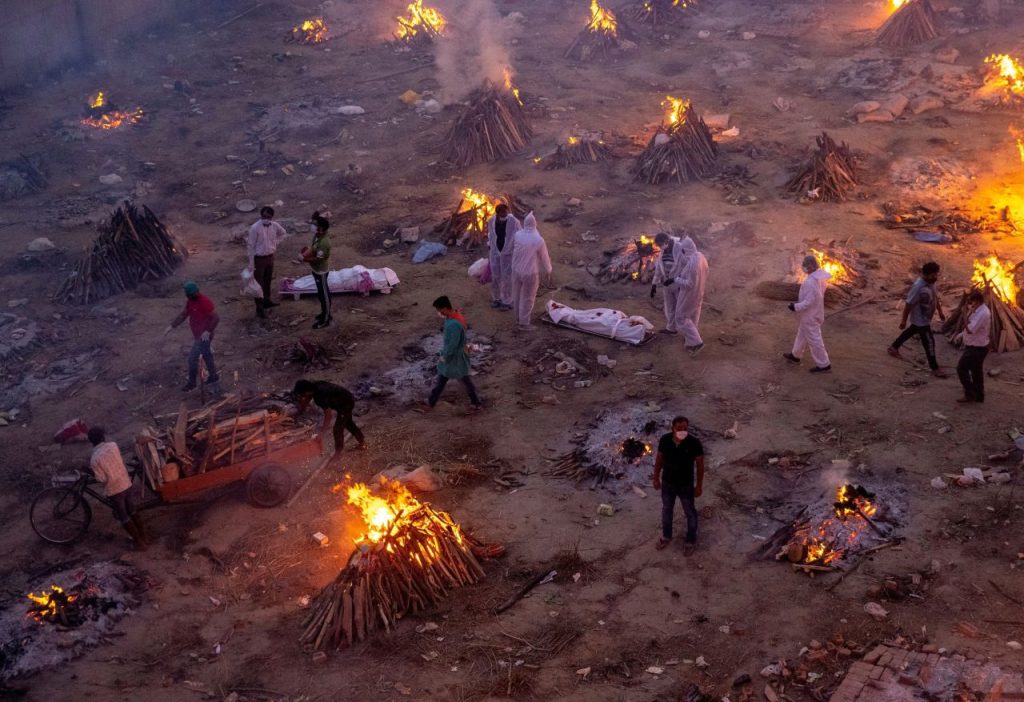
Prasanta Chakravarty Unappeasable and plain. That is the reason Simone Weil is able to unburden and pull us deeper into relentless entanglements and by doing so, sets us free. “The woman who wishes for a child white as snow and red as blood, gets it, but she dies and the child is given over to the stepmother” (Weil, 1947/1952). There are few statements that can match the starkness of the utterance. Weil considers chance in utter bareness. Chance makes every hope for security turn into a numbing stupor, and hence a joy forever, playing out its momentary and repeated whim in the lives of stranded creatures. The woman had craved for a perfect child, which is a remarkably hyperbolic aspiration in itself, biologically speaking. A speck of hubris. And yet a turn of fortuitousness conspires to bequeath her exactly what she had wished for: a white and ruddy child. But what human agent is she to desire such a gift of grace? But she does, and just like that, her wish is fulfilled. Happenstance. And at that moment, perhaps during childbirth or soon after, the woman dies. She was otherwise perfectly healthy. Some error or medical complication? Or perhaps something completely disconnected to the event of childbirth. Maybe a stray fever or a developing condition turning rogue? Chance’s scythe is unerring. She does not live to savour motherhood. The newborn too, is now reared by another woman, the stepmother—an event over which the little one has no will of its own. The child’s life takes a completely different dimension and trajectory. Is the new home a refuge and a safe-custody? Will the new born be loved, or be indifferently treated as a step-child? At the least the kid’s growing up will be different. And the stepmother, who had no plans perhaps for a child at this time, or conversely, had prayed intensely to have a child of her own—now will come to rear the child. She is given the child—someone somewhere decides to give the child to her. The child is given over to her. Their dual lot. Not by any physical agent—not by the nurse in the hospital or the official at the orphanage, but by chance. Do we still remember the second wave of pandemic in India? Thousands of corpses were detected floating in rivers in some parts of India and many more burnt on the banks. Dozens of bodies were being burnt in New Delhi too, on roadsides, since the crematoria were full. Round the clock. Veer Singh used to drive me occasionally from Noida–a suburbia of Delhi, to my university. One morning, at around 4 am, the door-bell rang. I opened the door and found Veer, with his 10-year-old daughter’s dead-body over his shoulder, coughing violently: “Saab, is nanhi sharir ko jalaane ka jagah nahi mil raha hai. Kal bete ko jalaane mein sab paise kharch ho gaye. Aaj ye. Kuch paise de do saab. Kuch bhi.” (Sir, I am unable to find a place to burn this innocent body. Yesterday I spent all my money to burn my teenage son. Today, this. Please help me with some money Sir. Any help will do”). I could do scant little. For a month Veer was not to be seen. And then he returned one Sunday and softly enquired whether I needed his services anymore. For the next three or four months he used to come sporadically: duty bound, but completely silent, with a vacant look about him. Then he disappeared again, never to be seen in the area. My life has moved on. “The beings I love are creatures. They were born to chance. My meeting with them was also by chance. They will die. What they think, do and say is limited and is a mixture of good and evil. I have to know this with all my soul and not love them the less” (Weil, 1947/1952). She doesn’t love less. In fact, Weil’s love is infinite since all our meetings take place by chance. Infinite love for finite things in that they are limited and finite. That we shall die makes the density of life that much more wondrous and acute. A pattern of moment-making flows underneath our chance encounters with each other. The piercing odour of intimate distance is to be savoured with the entirety of one’s being. We cling to each other, so that the infinite is made momentary. For caesura is inevitable. Caesura makes chance beautifully stark. This truth she has tried to know all her life, with a singular immersion and a geometric precision. So, she waits, preparing herself and her readers, to receive in its naked truth the object which is to penetrate our beings. Fragility projects the soul beyond time, into something enigmatic that must remain shrouded. Until grace arrives. After actor Sushant Singh’s death in June 2020, his friend and actor Rhea Chakraborty became a lightning rod for relentless trolling, threats and media trials. Her torment was not restricted to social media. A case for abetment to suicide, mental torture and financial fraud was registered. It was a free fall. Under immense public pressure, all major governmental investigative agencies were mobilized. Eventually, she and her brother had to face jail time for a month under some flimsy pretext. A lookout circular was promulgated against the Chakraborty family. Bit by little bit, the family was completely broken and devastated. They tried to show nobility, but under such scrutiny, there was no possibility of maintaining sanity. Everyone cheered on. She and her family were fodder for a primordial death dance of creatures we call humans. The rest remained silent. As other creatures know, humans are hardly like other creatures; they are smooth operators: crafty, pitiless and craven. Meanwhile, Rhea had to face travel restrictions and her bank account was frozen. Most importantly, her career as an actor was finished forever, though she has tried some comebacks since, not doing very well. Chance carries mischance along with it. She has