
Better A Live Sparrow Than A Stuffed Eagle

Ashok Pande [Ashok Pande is poet, painter and translator, working from Haldwani. His collection of poetry Dekhta Hoon Sapne got published in 1992. He has translated Laura Esquivel’s Like Water for Chocolate into Hindi and written books on Yehuda Amichai and Fernando Pessoa. His translations of Shamsher Bahadur Singh’s poems were published in 2002 as Broken and Scattered, and Viren Dangwal’s poems as It’s Been Long Since I Found Anything, in 2004. Other translations include: the novel Lust for Life, Dharti Jaanti Hai (Yehuda Amichai’s poems), Ekaakipan ke Bees Arab Prakashvarsh (Shuntaro Tanikawa’s poems) and selected poems and prose by Fernando Pessoa. This is his acceptance speech for the Laxmi Prasad Nautiyal Lifetime Award which was bestowed upon him in 2009. Translation by HUG] Traditionally and naturally, Scotsmen brew the best Scotch whiskey. Everybody knows that all Scotch whisky must be ripened in oak barrels for best results. The freshly fermented stuff must be matured and mellowed. And yes, as Scotch begins to age, the barrels breathe. Around 2 % of alcohol volume is lost to evaporation in the very first year. And a Scottish proverb tells us that indeed the humans have no right over this lost portion. That is the reason it is called Angel’s Share! Only when this portion has evaporated do we get the transformed and magical substance that Scotch whiskey is. Can one not say something like this about literary translations too? During the act of translation it may so happen that things get lost from the original but it is also possible that certain facets get added to it, so much so that the writer may not have been even aware of these nuances and possibilities during the initial composition. Perhaps such a comparison sounds a bit outlandish to you but in order to buttress my point let me narrate to you a rare literary incident. Not too many of you may have heard about Patrick Brandon. Critics and reviewers always felt that he did not exactly write first rate novels. One of his novels was translated into French by one Penelope Wilton and it so happened that this version received the highest literary award in France. Actually, Wilton had taken so much literary license that this regular thriller got turned into an autobiography of sorts. The original book by Brandon got trashed by the reviewers and was not even a popular success. It sank. In fact, during those days Brandon was pretty down and depressed by such a literary failure. He convinced himself that he will not wield his pen ever. And lo! This award, publication and amazing popularity of the translated book in France had literary agents and publishers making a beeline for him to buy the rights of his other works. When he came to know about the changes that Wilton had made in his novel he was happy, but was also hounded by a strange moral quandary. Penelope Wilton had transformed his novel into an intimate work of art. ————- Omar Khayyam is justly considered the greatest khalifa in crafting and nurturing the rubaai form. But this truly great eleventh century Persian poet was completely unknown in the wider world for centuries outside of Iran. Till Edward FitzGerald came. FitzGerald was considered eccentric and quaint in his own circles. It so happened that in 1856 one of his friends chanced upon a rare copy of Khayyam’s work in the Asiatic Library in Calcutta and sent it forthwith to FitzGerald in England. Fitzgerald was studying Persian and the Islamic religion during those days. And in January 1859, in the form of a little pamphlet, the first edition (75 quatrains) of The Rubaiyat of Omar Khayyam saw the light of the day. The translator’s name was not inscribed in it. And in the early days not too many readers noticed this little pamphlet. But soon the translation became a rage, as if it got a life of its own – and eventually got translated into many more languages. There were 5 editions in English by 1889. The rest is history. Surely FitzGerald must be given credit for this initial breakthrough: for simply making the effort and for his labour in translating the text. Fitzgerald himself called his work transmoglorification. In a letter to E. B. Cowell, written in 1859, he wrote: “I suppose very few people have ever taken such pains in translation as I have: though certainly not to be literal. But at all cost, a thing must live: with a transfusion of one’s own worse life if one can’t retain the Original’s better. Better a live Sparrow than a stuffed Eagle.” Rubaai has now become an established literary form all over the world, outside of its strict Islamic roots. For instance, Fernando Pessoa of Portugal and Nazim Hikmat of Turkey have also written their own Rubaiyat. ————— I am saying all this on such an occasion because this honour is being bestowed upon me primarily for my translations. It has usually been a convention to disregard the translator and not consider him to be a litterateur proper. His name, in a minor and inconsequential way, gets printed on that page where you have the publication and copyright details, price and so forth. On occasion, you don’t even have the appellation anuvaadak; what you see is anu, followed by a colon or a dot! Therefore, I would like to thank the referees and judges of this award from the bottom of my heart. I am overwhelmed by the realization that this is actually an honour to all those translators who have spent lifetimes in silent and dedicated endeavour, mostly unknown and unperturbed by ignominy, and still opened up in front of us a rich vista of distant worlds and cultures. I also know that I am not particularly qualified to receive this honour and was for a long time a bit hesitant and tentative – but this instance also makes me feel much more responsible, and I promise to work harder in the coming years so that I can
Deliverance, Rudraprayag
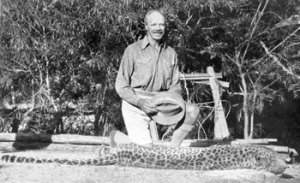
Gurney House, Naini Tal 2 May 1926 You brother has killed leopard, almost certainly Man eater, after sitting throughout eleven Consecutive nights in same tree for him. Congratulations and thanks for whole Garhwal, Particularly from Ibboston ——Telegram to Margaret Corbett from Ibboston Deputy Commissioner, Naini Tal ———————————————————– My dear Capt. Corbett, Allow me to thank you and congratulate you from the bottom of my heart for shooting the man-eating leopard who killed so many innocent women and children in Upper Garhwal. We, the Garhwalies, will ever remember you as the killer of the greatest enemy of Garhwal. I know how difficult it was to shoot that most cunning and sly beast. Perhaps you will remember that I had a talk with you about the beast at Niani Tal in 1924. I asked you to write to me your willingness to go to Rudraprayag to shoot him under the conditions you thought most sutitable for the expedition, and I handed over your letter to the Finance Member to utilize your services; but unfortunately, the then Deputy Commissioner of Garhwal did not accept your proposals, and took other means to get the leopard killed. But finally, it is you who was able to save Garhwal from the beast. You must be very proud of wonderful deed of yours, and you fully deserve the pride and honour which we gratefully associate with your name. —–Letter to Jim Corbett from Mukandi Lal, BA (Oxon), Barrister-at-Law, Member Legislative Council Lansdowne, Garhwal, 9 May 1926 —————————————————— Dear Capt. Corbett, I am desired to thank you on behalf of the Government of the United provinces for the valuable public service you have rendered in destroying the Rudraprayag man-eating leopard. This animal has preyed on the Rudraprayag neighbourhoods for over seven years and has killed no less than 125 human victims. You have, at considerable private inconvenience, spent many weeks in pursuit of this pest and have cheerfully borne much hardship and danger. You have earned the gratitude of the people of Garhwal, and the Governor in Council desires me to send you this sincere thanks and his congratulations on a fine achievement. ——- Letter to Jim Corbett from G.B. Lambert, United Provinces Government, D.O. No. 738-Z, Naini Tal, 17 May 1926 ——————————————————— Dear Sir, I have been directed by Colonel, His Highness the Maharaja Sahib Bahadur to convey to you His Highness’ very best congratulations on your keen sportsmanship in putting an end to the notorious man eating leopard. His Highness’ very best congratulations on your keen sportsmanship in putting an end to the notorious man eating leopard. His highness also wishes me to express his great delight at your being able to get rid of that terrible enemy and pest of the public of Garhwal. You have really done a great service not only to the people of Rudraprayag but to mankind in general. With renewed congratulations and best of luck… ——– Letter to Jim Corbett from the Private Secretary to H.H. The Maharaja of Dhar, 19 May 1926 adminhumanitiesunderground.org
“Binadi, You Are Sleeping With The Light On?”

Bina Das During our stay in the Presidency jail, we used to organize functions and theatrical shows. This time there were fewer restrictions. The jail authorities helped us in setting up the stage, and we rented dresses and wigs from dressers outside. Consequently, our performances reached quite a high standard of excellence. Besides, the political prisoners decided to observe all the functions organised by parties outside on political issues. This kept us in close touch with the political world outside and this was instructive for the common prisoners. Still, at times we got bored with everything. One evening I had a strange experience, bordering on reality and illusion. Friends had decided to organise Lenin’s Day. I was usually an observer on such occasions, but this time I decided to participate and resolved to prepare an essay on the subject. So, in the evening I shut myself up in my room and with a wrapper around my feet and a lantern by my side. I reclined with a pen and paper. There was a chill in the air and I was feeling sleepy. With a firm resolution, I set myself up to the task of preparing a homage to Lenin. I had just penned a few lines when I heard a masculine voice ask me laughingly, “What are you writing?” I looked up in surprise, and there, beside my bed, I saw Lenin. My body was paralysed. Was I dreaming? But it was more real than any dream. Removing the jumble of books on my table, he said again, “Well, you did not tell me what you were writing.” Nervously, I handed him the paper. After reading it, he returned the paper with a smile on his face. Finding my tongue, I asked, “Is it too bad?” “No. Why should it be bad? You Bengalis are never amiss at writing. Creating beautiful nothings with useless words. Even your detractors will agree on this.” This sudden attack on my people angered me, and in a heated manner I rejoined, “Oh, is that all you know about Bengalis?” Lenin’s smile became gentle. “No, I did not mean to hurt you. I know how passionately dedicated you are to a cause. But that is not enough.” After a pause he continued, “It’s true, you are always ready to sacrifice everything on a moment’s impulse; but you are totally unfit for the backbreaking and laborious task of pulling up a dying nation. Unless you are ready to lose yourselves with the millions of poverty-stricken destitute… I spoke up cheerfully, “Oh, don’t you know? We have also started to think along those lines.” “Who are these ‘we’?” “Well, we the workers. Today almost all political parties are thinking of mass awakening, mass movement.” I was interrupted, “You too think in the same way?” Quite annoyed, I replied, ‘Of course, how could you even ask?” “Well there is such a world of difference between your thoughts and your actions. With my Russian intelligence, I fail to understand you.” “What difference do you find?” “What difference you ask? Your beliefs may be all right, but as a worker, you are a complete failure.” Disconnected, I stammered, “It’s true, I didn’t do much when I was outside, but I tried. I formed unions in some mills. I led the workers through a successful strike. I visited some villages. I know I did not achieve much, but you know how difficult this kind of work is.” With a gentle smile he said. “Don’t be downhearted. I am not judging you by your success. I think you don’t understand the nature of the work. Or, realizing the difficulty of the task, you delude yourself. You do not have the forbearance for such self-sacrifice.” “Why do you say that?” “You are spending years in jail, side by side with the downtrodden, poverty-stricken people of your country. But how close do you get to them. What effect do you have on their minds? Do you ever try to teach them anything?” “You know how difficult it is to reach out to them in jail?’ “Difficult,” he roared with his eyes flashing. “The word difficult does not exist in a rebel’s dictionary. If I were in your place…” “Yes?” “I would have broken down all barriers and shown them how absurd it is to try and keep people apart.” Unconvinced, I said, “ Then they would have taken you away and locked you up in a solitary cell.” ‘Well that would have given me the honour of defeat. But what are you doing? You speak of equality, but here in jail you have formed a group of elite intellectuals and are spending your days in luxury. You treat the common prisoners as your servants and have no concern at all for their well-being.” “What can we do?” “You can do everything. You can share all your privileges with them; may be it won’t be much, but it will make them think of you as their own. If you think you don’t have enough to share, you can refuse preferential treatment.” Lots of arguments came piling up: that would only allow the government to save money. Would we able to share such hardship? We were not used to it; our health would break down under the strain. What about our studies? Realising that all these arguments were mere excuses, I remained silent. Lenin continued to look at me, and after a while he asked, “ What are you thinking. It is too difficult, isn’t it? It is easier to put your head in the hangman’s noose than to bear such affliction from day to day, isn’t it so? I bowed my head in silence. Lenin stood up, “I was right. I knew it. And not only you, I know about all the jails in India. Down from Jawaharlal and Jaiprakash to the communist students and workers of today, the problem is the same. You cannot forget your superior position; you cannot forego the privileges
Dashrath’s Dinner Party

By Amiya Sen Translated from the Bengali by Bhaswati Ghosh Originally published as “Dasharather Atithijawggo” in Desh As she pulled the curtains off the doors and windows and dumped them on the floor, Shakuntala hollered, “Munga, come here, fast!” Dashrath was at the dining table, shaving. Casting a glance towards Shakuntala, he said, “Why are you taking those off yourself? Have Munga do that…if you fell down—” “That worthless servant of yours. You brought home a rascal from the orphanage. It’s eight in the morning, and he is yet to finish his work in the kitchen. A heap of clothes remains to be washed. I must load them into the washer myself and wait until the cycle is completed. If left to him, he will ruin the clothes like he did last time. Sigh, your new safari suit and Gudiya’s expensive zari-bordered lehnga-choli.” “Let it be. Where will you get a servant for 30 rupees in today’s market? We are managing just fine. Hey, Munga, get up on the stool, take down the curtains and pile them in the backyard. Then bring a duster. Clean everything in all the rooms. Khabardar, nothing should break, or else I will beat you to a pulp, you understand?” Munga, once a resident of a developmental home governed by the Delhi Administration, said with a broad, foolish smile, “Ji.” Literate and illiterate, rich and poor, all kinds of residents in the capital make use of these homes. Any mentally retarded or low-IQ child in the family is swiftly dispatched to institutions like these. The Delhi administration has opened a lot of centres for the mentally challenged. The poor occasionally come to visit their children (they grow up into young men and women in the homes, though many also die from the ‘care’ they receive from the home staff). They even take the children home during holidays. But well-to-do families are interested in only admitting their children. They return at the very end, honking their cars, to collect the dead children’s bodies. It’s a relief to keep such social disgraces away from their day-to-day lives. This has been one of the boons of independent India. Alongside running several other types of homes, the Delhi Administration carries out a lot of social welfare activities by instituting shelters for insane and mentally challenged people. This has created thousands of jobs and countless official posts. It is quite remarkable. Munga is a lucky one. He caught the attention of the superintendent and found a place in his home as a child servant, thus being spared the decrepit paradise of the government home. Of course, the superintendent had to pay a price for it every month–30 rupees. Considering the scarcity and steep cost of domestic servants in Delhi, this is a small amount. Five years ago, Dashrath Sharma, the superintendent’s brother-in-law, brought Munga to his own house. The child grew up into a young adult at his home even as Dashrath’s own fortunes blossomed. The fifteen hundred rupees that he earns as salary for the job he poses to be doing in Delhi Administration’s Social Welfare department is just his pocket money. As with many others, the job is only a front for him. His primary enterprise comprises a variety of side businesses. It began with a scooter dealership that he started with a small investment. Next, he moved to real estate. Thanks to the arrival of Maruti, he now has a dealership for automobiles. Before this, he also dealt in colour television sets for a while, but left that because of the high profitability in the auto business. In Delhi, money overflows from people’s pockets; there’s no place to store the cash. Black money can’t be stashed in banks either. This explains why even seemingly innocuous looking middle-class people have an underground basement in their house–even if it’s no bigger than a match box. One only has to place a life-size photo of Rama or Hanuman on the wall next to the stairs leading to the basement. That does it. It’s a god-fearing country after all. Even Information Bureau and Income Tax officers are forced to bow down and take leave. As two-wheelers like scooters, mopeds and motorbikes started becoming vehicles of the lower middle classes, the demand for cars was at its peak. Dashrath made the most of it. Every car brought a fat amount, including the booking cost. Most people didn’t want to remain stuck in the waiting list–they were willing to spend a few extra thousand rupees if that could get them the car faster. When Dashrath hadn’t made it big, he had also opened a marriage bureau. That brought the telephone in his house. But as the phone came to be used more for inquiring the market rates of limestone, sand and cement, the butterfly of the marriage bureau fluttered away. Not a big deal. Dashrath harbours no regrets over it. His three older brothers were reasonably well-heeled. He was way down on the scale, a member of the lower middle class. He had funded his graduate studies by offering tuition classes. After searching high and low for a job, he found one with a salary of 35 rupees. To keep the job he had to buy a bicycle in installments. That’s when it struck him that one could no longer get to the top by climbing one stair at a time. In order to succeed, it was necessary to have a political party’s support. So he joined a party. The results were instantaneous. Using the party affiliation he obtained a fake social worker certificate that got him his current job as a probational officer in the Social Welfare department. At the time, his party was a superpower–everything from the corporation to the municipality was in its control. Dashrath had to participate in some party activities, though. Dashrath Sharma was at the forefront of the mutiny that erupted in the university campus, gunning for the removal of the Vice Chancellor who came from