
Two Stories

Kate Chopin The Kiss It was still quite light out of doors, but inside with the curtains drawn and the smouldering fire sending out a dim, uncertain glow, the room was full of deep shadows. Brantain sat in one of these shadows; it had overtaken him and he did not mind. The obscurity lent him courage to keep his eves fastened as ardently as he liked upon the girl who sat in the firelight. She was very handsome, with a certain fine, rich coloring that belongs to the healthy brune type. She was quite composed, as she idly stroked the satiny coat of the cat that lay curled in her lap, and she occasionally sent a slow glance into the shadow where her companion sat. They were talking low, of indifferent things which plainly were not the things that occupied their thoughts. She knew that he loved her-a frank, blustering fellow without guile enough to conceal his feelings, and no desire to do so. For two weeks past he had sought her society eagerly and persistently. She was confidently waiting for him to declare himself and she meant to accept him. The rather insignificant and unattractive Brantain was enormously rich; and she liked and required the entourage which wealth could give her. During one of the pauses between their talk of the last tea and the next reception the door opened and a young man entered whom Brantain knew quite well. The girl turned her face toward him. A stride or two brought him to her side, and bending over her chair — before she could suspect his intention, for she did not realize that he had not seen her visitor — he pressed an ardent, lingering kiss upon her lips. Brantain slowly arose; so did the girl arise, but quickly, and the newcomer stood between them, a little amusement and some defiance struggling with the confusion in his face. “I believe,” stammered Brantain, “I see that I have stayed too long. I — I had no idea — that is, I must wish you good-by.” He was clutching his hat with both hands, and probably did not perceive that she was extending her hand to him, her presence of mind had not completely deserted her; but she could not have trusted herself to speak. “Hang me if I saw him sitting there, Nattie! I know it’s deuced awkward for you. But I hope you’ll forgive me this once — this very first break. Why, what’s the matter?” “Don’t touch me; don’t come near me,” she returned angrily. “What do you mean by entering the house without ringing?” “I came in with your brother, as I often do,” he answered coldly, in self-justification. “We came in the side way. He went upstairs and I came in here hoping to find you. The explanation is simple enough and ought to satisfy you that the misadventure was unavoidable. But do say that you forgive me, Nathalie,” he entreated, softening. “Forgive you! You don’t know what you are talking about. Let me pass. It depends upon — a good deal whether I ever forgive you.” At that next reception which she and Brantain had been talking about she approached the young man with a delicious frankness of manner when she saw him there. “Will you let me speak to you a moment or two, Mr. Brantain?” she asked with an engaging but perturbed smile. He seemed extremely unhappy; but when she took his arm and walked away with him, seeking a retired corner, a ray of hope mingled with the almost comical misery of his expression. She was apparently very outspoken. “Perhaps I should not have sought this interview, Mr. Brantain; but — but, oh, I have been very uncomfortable, almost miserable since that little encounter the other afternoon. When I thought how you might have misinterpreted it, and believed things” — hope was plainly gaining the ascendancy over misery in Brantain’s round, guileless face — “Of course, I know it is nothing to you, but for my own sake I do want you to understand that Mr. Harvy is an intimate friend of long standing. Why, we have always been like cousins — like brother and sister, I may say. He is my brother’s most intimate associate and often fancies that he is entitled to the same privileges as the family. Oh, I know it is absurd, uncalled for, to tell you this; undignified even,” she was almost weeping, “but it makes so much difference to me what you think of — of me.” Her voice had grown very low and agitated. The misery had all disappeared from Brantain’s face. “Then you do really care what I think, Miss Nathalie? May I call you Miss Nathalie?” They turned into a long, dim corridor that was lined on either side with tall, graceful plants. They walked slowly to the very end of it. When they turned to retrace their steps Brantain’s face was radiant and hers was triumphant. * * * * * * * * * * * * * * * * * * * Harvy was among the guests at the wedding; and he sought her out in a rare moment when she stood alone. “Your husband,” he said, smiling, “has sent me over to kiss you.” A quick blush suffused her face and round polished throat. “I suppose it’s natural for a man to feel and act generously on an occasion of this kind. He tells me he doesn’t want his marriage to interrupt wholly that pleasant intimacy which has existed between you and me. I don’t know what you’ve been telling him,” with an insolent smile, “but he has sent me here to kiss you.” She felt like a chess player who, by the clever handling of his pieces, sees the game taking the course intended. Her eyes were bright and tender with a smile as they glanced up into his; and
Sabotage Not Terrorism

Alberto Toscano [The Context: The Tarnac Nine are nine alleged saboteurs arrested in the village of Tarnac, France in November 2008 in relation to a series of instances of direct action. The gendarmerie, French police, entered Tarnac with helicopters and dogs and dragged the suspects from their beds. Around twenty people were arrested on November 11, 2008, and nine of those were charged with “criminal association for the purposes of terrorist activity”. Of those nine, Yildune Lévy was released, under review, on Jan 16th 2009 and Julien Coupat was released on May 28 of the same year. The nine are predominantly graduate students from middle-class backgrounds–22 to 34 years old. Five of the nine had been living in a farmhouse on a hill overlooking the village.] The war on terror, which we were once told was infinite, seems past its sell-by-date. Even David Miliband has declared the term to be “misleading and mistaken.” But its effects on our polities persist. Following an age-old script, laws that had been sold as emergency measures have sunk their roots deep into the practices and mentalities of our governments. All forms of dissent that are linked, however tenuously, to politically-motivated illegal behaviour now fall within the purview of anti-terrorism measures , which claim to a nebulous “security” as their ultimate rationale. While the geopolitical imperatives that underlay the war on terror are being fundamentally questioned, anti-terrorism continues to be used and abused as a flexible repressive instrument across Europe and beyond. From ecological activism to sociological research, there is little that anti-terrorism legislation cannot cover. The case of the “Tarmac Nine,” which had drawn such attention in France after a series of spectacular arrests on 11 November 2008, is a case in point. Named after the village in the Corrèze district where a number of the prosecuted lived collectively and ran a grocery store and film club, the case revolves around the accusation that these politicised 20- and 30-somethings were responsible for a series of sabotage actions against the high-speed TGV trainlines in early November, which resulted in massive delays. From the outset, the case has been choreographed by the government, specifically by Sarkozy’s then minister of the interior, Michele Alliot-Marie. To consider the Tarnac case is to be faced with a pattern for the criminalization of dissent which is becoming ever more general, and which is likely to intensify as Europe (witness the events in Greece over a period of time) is confronted with forms of social conflict which challenge the viability of the socio-economic order. The French authorities have made it clear that the aim of this highly spectacular operation was to send a pre-emptive message, to nip in the bud the perceived threat of anti-capitalist movements that refuse the parliamentary arena and opt for direct action. This is what the French security services, with the imprecision typical of inquisitions, have been referring to as the “anarcho-autonomist tendency”. They have also referred to these political milieus as “pre-terrorist”. The term is key. To the extent that terrorism is no longer perceived as a tactic, however repugnant, but as a kind of total crime beyond the pale of explanation or negotiation, the “pre-terrorist” is already on the way to becoming an absolute enemy of the state. This is how the same material act – the sabotage of a train line, for instance – may be perceived as an act of vandalism in one case, and as a political threat to the state in another. The consequences are clear, and they are disturbing. The implementation of antiterrorist legislation is profoundly arbitrary and selective, hinging on the political proclivities of ministers, magistrates and the police, increasingly acting in concert and bypassing customary legal safeguards, above all the presumption of innocence. If hard evidence is absent – as it seems to be in the Tarnac case – then lifestyle and beliefs will do. This was the approach taken by the minister of the interior herself. Recognising that there was no sign of attacks against persons in the whole affair, she nevertheless declared: “They have adopted underground methods. They never use mobile telephones, and they live in areas where it is very difficult for the police to gather information without being spotted. They have managed to have, in the village of Tarnac, friendly relations with people who can warn them of the presence of strangers.” The very fact of collective living, of rejecting an astoundingly restrictive notion of normality (using a mobile, living in cities, being easily observable by the police) has itself become incriminating. The prosecution’s other plank, the alleged authorship by Julien Coupat (the only one of the accused still under preventive incarceration) of an anonymous book entitled The Coming Insurrection, which refers to acts of transport sabotage as part of an anti-capitalist rising of “communes”, also follows the pattern where the “pre” in pre-terrorism is defined by political statements or beliefs at odds with the current order. The support committee of the Tarnac Nine has lucidly argued that antiterrorism has become a full-fledged method of government, a willfully vague expedient in the arsenal of the modern state. There is much at stake. We are losing the political literacy, and the legal capacity, to distinguish between sabotage and terrorism, vandalism and mass murder, as every oppositional alternative to the status quo is swallowed up under the umbrella of terrorism. In times of crisis and possible turmoil, this one-dimensional thinking is profoundly dangerous, and an insidious threat to everyone’s “security”. —————— Alberto Toscano is a lecturer in sociology at Goldsmiths, University of London. He is best known to the English-speaking world for his translations of the work of Alain Badiou, including Badiou’s The Century and Logics of Worlds. He served as both editor and translator of Badiou’s Theoretical Writings and On Beckett. His book Fanaticism: The Uses of an Idea was published in 2010. adminhumanitiesunderground.org
Aim, Shoot, Poster
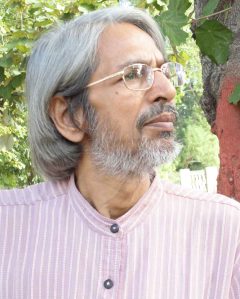
Alok Dhanwa District Magistrate You are an outdated speaker You speak such an oppositional tongue As if you are fighting kings Of a time when Parliament was unborn still Do you think the Parliament has allowed The language and traps of hostility the same As it used to be during the times of the kings? This man, on the other side of the table, listening to you so intently Patiently, with full concentration He is not a king He is the district magistrate. He is the district magistrate More educated, adept, impersonal Than the king. This man is not from that distant fort—brought up in cold pomposity. He was born in these back-alleys He’s brought up amid our failures and mistakes Aware of our courage, greed He is way more indulgent and canny than the kings. He can conjure up more confusion And keep us away more clinically from freedom The government must keep close vigil on his superlative mind. Sometimes we must even learn from him. ——————– Lights, Projection, Your First Film The night the bund gave way And the river flowed in You didn’t even care to inquire The way you grew up without this town Where stood your first train Lights, projection, your first film. ———————————— Chowk The riches of those women have remained with me The ones who had trained me to cross the chowk From my mohalla they turned up Every morning to their work they went My school on their way Ma would lend me to them. In their safeguard. And I would await them after school-break. Yes, those women taught me waiting. And then the local quasbah school loomed On my own now, I made other friends. There were other roads to the school, other keys We found out soon. Decades gone, those days Come back to me. In some big city Seeking to go across some odd, imposing chowk I think of those women I extend my right hand to them And with my left, I clutch the slate The way I had left them At the broadsheet-backs of my twenty twenty years. —————————– Who Saved my Soul? Who saved my soul? A flicker of a light from the little candle A few boiled potatoes saved it. Flames in dry leaves And earthen utensils saved it. That jungle yellow cot And that yellow coloured moon Those street-play lumpen jokers In rags With voices like the glory of truth Tussling, exchanging blows In street corners Driving away rioters From these fearless blithe Hindustanis have I learnt the craft of the stage Drama seemed like some thoroughly drenched outfit. Carrying tongs for grandma’s rotis From the Idgaah mela, little Hamid returns And after December 6 As February was sneaking in Wild berries Yes, these things have saved my soul. —————————— Worth Now you even get paid for forgetting This is what greedy, untroubled folks do. —————————— Junction Ah, Junction. Where the train stops for some time. Tarries. Refuels itself for the rest of the journey I look for my old sweetheart there. —————————————- Aim, Shoot, Poster Is it April 20, 1972 Or the right arm of a professional killer or the leathery mittens Of some spy or some stain on the binoculars of a marauder? Whatever it might be, I can’t call it a day. It is an ancient place where I am writing now Where till this day, tobacco sells more than words The sky here is pig high Nobody uses tongue here Nobody uses eyes here Nobody uses ears here Nobody uses nose here Here: only teeth and stomach Arms scraped in soil No humans Save a blue khokhal Relentless, that seeks grain From one torrential rain to another… Here, is this woman my ma Or an iron girder 5 feet tall In which hangs a couple of dry rotis. Like long dead birds There is no gulf between my daughter and my strike As constitution, true to its promise Keeps on breaking my daughter and my strike. After one flash election Am I supposed to stop thinking about explosives? On this April 20, 1972, can I live with my children like a father ought to live? Like an inkpot filled with ink Like a ball Like a heath full of grass Can I live with my children? Those people ferry me to my poems They use and blindfold me, let me rot across the border Never letting me reach the capital, distant I get hounded, detained even before I reach the Zila-town. No, not the government The cheapest cigarette brand in this country has stood by my side. My childhood, that germinated near my sister’s feet Like yellow rend shrubs Has been flattened by the daroga’s buffalo If the daroga has the right to shoot so that he can save what remains human Why not me? In this soil that I am writing now In this soil that I walk In this soil that I plough In this soil that I sow the seeds And this soil from which, extracting grains I carry to the godowns and storehouses Should I have the right to shoot for this soil Or this rat of a zamindar who wants to make this country A moneylender’s dog? This is not a poem. It is the realization of shooting bullets Which are now meeting every single pen-pusher. Every single tiller. ————————— Girls on Rooftops Still the girls come on to the rooftops Their shadows fall on my life The girls are here for the boys Downstairs, amidst bullets, the boys play cards Sitting, on the stairs above the drain Lazing on benches outside the footpath tea-stall Sipping tea Around a boy
Better A Live Sparrow Than A Stuffed Eagle

Ashok Pande [Ashok Pande is poet, painter and translator, working from Haldwani. His collection of poetry Dekhta Hoon Sapne got published in 1992. He has translated Laura Esquivel’s Like Water for Chocolate into Hindi and written books on Yehuda Amichai and Fernando Pessoa. His translations of Shamsher Bahadur Singh’s poems were published in 2002 as Broken and Scattered, and Viren Dangwal’s poems as It’s Been Long Since I Found Anything, in 2004. Other translations include: the novel Lust for Life, Dharti Jaanti Hai (Yehuda Amichai’s poems), Ekaakipan ke Bees Arab Prakashvarsh (Shuntaro Tanikawa’s poems) and selected poems and prose by Fernando Pessoa. This is his acceptance speech for the Laxmi Prasad Nautiyal Lifetime Award which was bestowed upon him in 2009. Translation by HUG] Traditionally and naturally, Scotsmen brew the best Scotch whiskey. Everybody knows that all Scotch whisky must be ripened in oak barrels for best results. The freshly fermented stuff must be matured and mellowed. And yes, as Scotch begins to age, the barrels breathe. Around 2 % of alcohol volume is lost to evaporation in the very first year. And a Scottish proverb tells us that indeed the humans have no right over this lost portion. That is the reason it is called Angel’s Share! Only when this portion has evaporated do we get the transformed and magical substance that Scotch whiskey is. Can one not say something like this about literary translations too? During the act of translation it may so happen that things get lost from the original but it is also possible that certain facets get added to it, so much so that the writer may not have been even aware of these nuances and possibilities during the initial composition. Perhaps such a comparison sounds a bit outlandish to you but in order to buttress my point let me narrate to you a rare literary incident. Not too many of you may have heard about Patrick Brandon. Critics and reviewers always felt that he did not exactly write first rate novels. One of his novels was translated into French by one Penelope Wilton and it so happened that this version received the highest literary award in France. Actually, Wilton had taken so much literary license that this regular thriller got turned into an autobiography of sorts. The original book by Brandon got trashed by the reviewers and was not even a popular success. It sank. In fact, during those days Brandon was pretty down and depressed by such a literary failure. He convinced himself that he will not wield his pen ever. And lo! This award, publication and amazing popularity of the translated book in France had literary agents and publishers making a beeline for him to buy the rights of his other works. When he came to know about the changes that Wilton had made in his novel he was happy, but was also hounded by a strange moral quandary. Penelope Wilton had transformed his novel into an intimate work of art. ————- Omar Khayyam is justly considered the greatest khalifa in crafting and nurturing the rubaai form. But this truly great eleventh century Persian poet was completely unknown in the wider world for centuries outside of Iran. Till Edward FitzGerald came. FitzGerald was considered eccentric and quaint in his own circles. It so happened that in 1856 one of his friends chanced upon a rare copy of Khayyam’s work in the Asiatic Library in Calcutta and sent it forthwith to FitzGerald in England. Fitzgerald was studying Persian and the Islamic religion during those days. And in January 1859, in the form of a little pamphlet, the first edition (75 quatrains) of The Rubaiyat of Omar Khayyam saw the light of the day. The translator’s name was not inscribed in it. And in the early days not too many readers noticed this little pamphlet. But soon the translation became a rage, as if it got a life of its own – and eventually got translated into many more languages. There were 5 editions in English by 1889. The rest is history. Surely FitzGerald must be given credit for this initial breakthrough: for simply making the effort and for his labour in translating the text. Fitzgerald himself called his work transmoglorification. In a letter to E. B. Cowell, written in 1859, he wrote: “I suppose very few people have ever taken such pains in translation as I have: though certainly not to be literal. But at all cost, a thing must live: with a transfusion of one’s own worse life if one can’t retain the Original’s better. Better a live Sparrow than a stuffed Eagle.” Rubaai has now become an established literary form all over the world, outside of its strict Islamic roots. For instance, Fernando Pessoa of Portugal and Nazim Hikmat of Turkey have also written their own Rubaiyat. ————— I am saying all this on such an occasion because this honour is being bestowed upon me primarily for my translations. It has usually been a convention to disregard the translator and not consider him to be a litterateur proper. His name, in a minor and inconsequential way, gets printed on that page where you have the publication and copyright details, price and so forth. On occasion, you don’t even have the appellation anuvaadak; what you see is anu, followed by a colon or a dot! Therefore, I would like to thank the referees and judges of this award from the bottom of my heart. I am overwhelmed by the realization that this is actually an honour to all those translators who have spent lifetimes in silent and dedicated endeavour, mostly unknown and unperturbed by ignominy, and still opened up in front of us a rich vista of distant worlds and cultures. I also know that I am not particularly qualified to receive this honour and was for a long time a bit hesitant and tentative – but this instance also makes me feel much more responsible, and I promise to work harder in the coming years so that I can