
Gossip, Gossip, Gossip ! The Jail is Full of Gossip.

Snehangshu Kanta Acharyya [S.K. Acharyya was in prison in 1963, under the Defense of India Rules, which empowered the Government of India to imprison whoever it wanted as long as it wanted, without trial or charge. Barrister Acharyya was later the Advocate General of West Bengal. Here is a selection from his meticulously maintained diary.] ————————————– I entered the Presidency Jail at about 9 PM. After long spending time in the general lock up. I was taken to Ward No. 18 and there I found an advocate of our High Court, Kazi Mohammad Ali who was known to me for I had appeared as his senior in some cases he brought to me. Apart from Kazi, there were two New Zealanders who were kept there as under-trials having involved in some smuggling cases. I was surprised to find two other detainees, members of the C.P. I., who were in the same ward as me though sleeping on the floor and staying downstairs in Ward 17 but without the privilege of being in Division I. After my arrival, I talked through the door which separated the next ward on the western side where all other detainees of the C.P.I. were lodged. When I saw these two detainees in my ward, I got the first hint of the division which had broken out openly in the C.P.I. which was reflected inside the jails as well. ******************** The evening was the dullest part of the day. Lights were bad, making serious reading an impossibility. The greatest irritation was that the lights were not turned off at night and as I had this habit of sleeping in the dark, the bright lights made sleeping a near impossibility. The convicts somehow managed by playing cards and then take a few puffs of ‘ganja.’ But for time hangs heavily. I felt that it would have been better to have been in the thick of it and suffered than to have been in the fringe doing no good either to my family or to the movement. Anyway, this has cured me of vacillation. ****************** There was an announcement by the Jail authorities that persons donating blood will have remission of their sentences. This was greeted by continuous boos and howls. Some of our ‘Faltus’ commented that blood would be sold by authorities and not used for poor patients needing it. One of the prisoners told me that he had witnessed a strange sight: one night he saw in Kidderpore a lorry pick up some destitute and he joined them too. They were brought into a hospital having a blood back and all these persons were forced into a room and blood extracted. Some were paid paltry sums and after a heavily sugared cup of tea they were brought back in the lorry and left at Kiddepore again, but in a different route and were shooed off. ******************* The Librarian came and I returned all the books which I had taken, except for Agni Bina by Kazi Nazrul Islam. I somehow feel too overwhelmed to read novels, so I had selected some old Bengali dramas to renew my long lost memory. God alone knows when the books send by my wife will be ‘cleared’ by the Intelligence Branch for delivery to me. ********************* When I was in Conakry last October , I saw the prized representatives of the countries ruled by lesser Nehrus. All these representatives are typical boot-lickers of different Metropolitan Powers and are inordinately fond of European ways! ********************** Gossip, gossip gossip. The jail is full of gossip. What goes on in different wards. Yesterday, the P.D Act boys asked whether I shall be freed today. They had heard it in the office. I told them that my fate is not to be guessed by any jail officer. One new chap who has come along, has been, it seems, deliberately planted amongst us. The jails in India are run by convicts….The faltus do our work, bring food and also keep watch on us and on each other. ******************* The latrines are just too awful and I never go anywhere near these, unless I am literally forced to go. The bath, or the reservoir is full of cockroaches and insects floating about on the surface and the dropping of the birds and lots of feathers. The room or the ward is dirty, the roof is full of soot which descend on us quite often. The food, as I have said, is muck. The British had treated Indians as animals and convicted prisoner is certainly a creature below an animal and therefore this utter disregard to human desires or even human squeamishness. The Congress government and its champion Nehru, being a Harrow boy, has the identical mental attitude towards sub-human Indians, in general, and inhuman prisoners in particular, and have, therefore, kept the British system intact. ******************** There was a sudden visit by the Jailer and his deputy to carry on a search of our bed, body and boxes. Then suddenly the Jailer asked me if I had bought four exercise books for writing and have asked for two more. I said that it was so. He wanted to see my writings for censoring. I told him that I shall not give them to him under any condition. These writings were my own thoughts put to paper. I would like to see the rules which state that he could see them. I am of the opinion that there were none. But in case there were indeed such rules, I shall burn my writing rather than allow any ugly and mentally deficient stooges of Nehru look into them. He told me that I had better talk to the Superintendent. I shall take this matter up, I replied, to the Home Department or to the High Court if necessary. Anyway, I have started another book with only cryptic notes, in case my writings have to be destroyed. ********************** While I was writing a series of terrible shrieks came out
Clones

Akhlaq Dorji Chanda The two of them entered the world of blunt trauma. And a thick vat of pounding love and lust. In the woods on the southfacing slopes, just beyond the Parthasarathy rocks, they had a rock of their own. A mini plateau of a rock. The small trail where ghostly humans frequented their ancient trembling urges to the root, led to the top of a landing. Mice and mosquitoes accompanied the two at every step. They walked. Wordless. The woman followed the pathway made by the man among the brambles and moss. At the far corner of the thicket a dark curl of smoke rose, burning varnish and twigs perhaps for the kabadis and charwahs after the andhi last evening. They ducked—squatted and tried to make sense of such kindred hellbirds ; other unfulfilled sensile bodies. The two looked liked spirits hollowed out of the marsh. A moonless January evening in Delhi and the dark fell like a thunderclap and twigs and leaves continued to gnash beneath their feet. The two moved on. And a kumthha shrub caught her shawl and millions of thorns held her back. He turned back and freed her move. He looked like a raggedy soul, who could frighten the drifting nilgais with his very presence. And she, something burning within, hardening—eyes now tender, now locked in their corral like hot flex. He entered the consecrated expanse and looked at the ground. An aluminium bucket and some leftover food in the dirt he quickly noticed. Ah, other ghosts had been here. Ghosts seeking their own grave. She whipped out a bottle—still icy cold, water it was. And shuffled a torch through the gloom in order to make sense of their bearings. The woven limbs of the ancient kadamb and dhau trees stood still, motionless above, guarding the rock. And apparitions. She placed the rug, their bedroll, beneath. Squatting tailorwise. He could see her contours—her superb long -lived foreleg, her untousled hair. Her nose most of all—sharp, hungry, sniffing earth and marsh. The torch glowed sideways. He shoved aside his dirty boots. And now he gestured with his elbow. And fastened their possibles on to the near branch—yesterday’s meat, nuts in a panni and a couple of beer bottles. The bygone misogyny returned as he looked at her contours again—he remembered his favourite Appalachian lines—‘they is four things that can destroy the earth—women, whiskey, money and niggers.’ Are these fit for Aravalli too? But this woman he loved. Far beyond his own ways. This creature of a woman. She has been running like a machine for a thousand years. He loved those centuries. They provided habit. Did God make this world to suit us? She thought, even as she was becoming aware of his gaze—tender and fierce. She knew exactly what he had in mind. Lust and harsh dissipation. And a searing jealousy that was their lot. She can know her heart but she did not want to. It was like swinging against a barrage—again and again. Every time she would deeply feel his non-politics, every time his ways of making love left fresh fleck on her skin, every single time she would be aware of her own different destiny. Losing grip, shaken like a guilty thing surprised, she would gain love and strength for one more birth. And grow ancient in some wounded grace. And every single time the beast in her would quiver like a drygulch wraith, booming and banging against her own wish. Best not to peep in there. No. Can she tend this meaningless casual darkness of his soul? Can she bear these destructive caustic blood clots in his brain? And her own ghosts—yes, they arrive and keep on swarming, dancing naked all around her pyre of a mind. Nilgais stamped and snuffled somewhere close in the dark. And he lurched forward to hug her slender buttocks from behind. Crossbreeds they were at that moment. Running rough. Matted and greasy with the gloom. Her ribs were like fishbones as she turned and swung at his torso. As she put his weight over her wiry body, she was thinking about the meetings with the minister and marches and slogans and papers and write-ups and petitions and about her kid and distant her mind went, to a world of her own—Hallabol Hallabol! The grass and the stars seemed like a hazy nebula. A pattern that has followed her life, never to become her own. She looked up the sky and vultures seemed to be circling above the world. Their silhouettes across the still, vaulted sky like a pale ghost army. Were they from another order? Now sweat beaded her free nipples and as he went wild he kept on muttering, wheezing at times. And she knew this rhythm; across the milky-way like a great electric kite the Great Bear rose and the two of them wrapped like the last sentinels untouched by a decaying, happy world outside. That world—shining, value laden India, was not theirs. Tethered to each other they were tethered to true geology. Like navigators in a plateau pounding and brawling, sifting obstinate jealous shadows of a lifetime, they battled with each other. Their teeth on edge and sand and grit in every pore and in every bit of the meat and nuts there was dust. That night they rode through a region galvanic; raging shapes lead to soft blue fire and returned back to the great clanging ridges of the folded Aravalli. ********************* The sun rose blearily. And he remembered his interview today. 300 yards from the sun and sand that he found himself in. The hallowed world of academia shall greet him, if he is able to play his cards craftily. He turned around and she looked like an angel bathed in contentment. At a distance he saw the corrugated form of a jhinjheri tree in full glow. And geometric butterflies abuzz like wood nymphs, circling around ragged kerfs and shrubs. He knew contentment meant nothing.
Crows in the Mist

Parimal Bhattacharya ‘Most of the mango trees around our house were part of the family’s common property. Nobody had rights over the green fruits that dropped on their own, sometimes hit by a nor’wester, or the ripe ones that fell in the middle of the night; anyone could pick them up. Unnoticed, the mango flowers would blossom and one day aunt would open her fist to show a tiny green mango.’ This is from the autobiography of Manindra Gupta, a poet, as he remembers his childhood days in a village in erstwhile East Bengal. He then goes on to describe how they would run about in the mango orchard during a summer squall, amid the swaying branches and thunderclaps, as the green mangoes swung above their heads like trapeze artists until they snapped and fell. His aunt had a hunter’s alert ears. She could pick out the solitary thud of a dropped mango from the web of sounds of the nocturnal garden, could detect the noise of fruits falling in the bushes, upon hard earth or grass, or in the wet mud around the pond. Carrying a lantern, she would unfailingly reach the spot. In Bibhutibhushan Banerjee’s Pather Panchali, there is a passage where Apu and Durga go to a mango orchard during a thunderstorm. The scene is there in the Satyajit Ray movie based on the novel as well. There is another scene in the film where their mother Sarbojaya, rain drenched, stealthily picks a coconut from a neighbour’s garden. In countless stories and memoirs set in Bengal, divided and undivided, there are descriptions of green mangoes dropping during summer squalls, of coconuts dropping in ponds, of ripe palm fruits dropping in the somnolent heat of autumn afternoons. The thuds and plops of fruits dropping on the green, fecund earth of Bengal have echoed in the collective memory of generations of Bengalis. It did not fade even after the Partition and the exile that followed, but continued through the rattle of tramcars, the patter of typewriters and the wail of the mills’ sirens. The same thuds and plops echoing in the memory could even block out the sounds of skeletal men and women dropping dead on the footpaths of Calcutta during the great Bengal famine of 1943. In the late 1960s, another sound was added to the acoustic memory of Calcuttans: that of youthful human bodies dropping on the Maidan, the wide parade ground in the heart of the city. Falling on the dew-wet grass at dawn, those sounds almost perfectly replicated the thud and plop of fruits dropping before their time. Just before that one would hear, like an approaching nor’wester, the rumble of police vans, followed by the groan of a door opening, the swish of running feet on wet grass, the whistle of a rifle, and then …One couldn’t see much in the thick, early morning mist; one could only hear. The mist, laced with wisps of grey diesel fume that hung in the air through the night, had begun to dissipate with the first rays of the sun, and was now whisked up by a man running through it, like a paintbrush on wet canvas. A silence would descend as the gunshot scared off a colony of birds on the trees by the Red Road. After the police van would leave, a slow breeze would begin to blow from the direction of the river. The bronze fairy atop the Victoria Memorial still revolved in those days; a keen ear would pick out the faint metallic whirr in the stillness of the morning. Soon the crows would appear… ————————————- Parimal Bhattacharya is a Bengali writer whose books include Darjeeling: Smriti Samaj Itihas and Satyi Rupkatha – Odishar Ek Upajaatir Jibansangram. This is an excerpt from Dyanchinama. [Translation: Parimal Bhattacharya.] adminhumanitiesunderground.org
Symbol
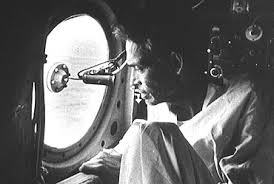
Ritwik Kumar Ghatak Symbol—what we call prateek in Bangla. The thing is the fruit of proliferating human thinking and meditation. These days, I feel, its behaviour and movements have also had an enormous impact on the creaturely and animal world. So, it is natural that in every human art-form it will occupy a major place. One of the main reasons for this is that this thing called art, on its own, desires such a thing called symbol. It gravitates towards it. Let me explain. How is art born? All art is born from the labour that is generated to cater to all kinds of human wish-fulfilment. The earliest of the art forms about which we have heard are in those well know cave paintings, say, in Altamira, Lacaux orFreyja. At that time the most primitive humans, who lived in Europe during the Palaeolithic Age, would collectively hunt the beast called the Mammoth and with various body-parts would garner food, raiment, source of light and even weaponry. Now, as these primitive humans developed a sense of the magical, the magus-wizard arrived, divined and decreed that if they drew a mammoth and pierce its heart with a spear, they would be successful in hunting down those beasts in the real world. So, art is hardly for art’s sake. It is for the stomach. If we try to hunt the source of primitive music, the story would be similar. There was primitive communism in the earliest phase of human existence—a collective, kaumi and goshti way of living. If you work together—if collective muscles work in unison to pull an object or push it or lift or put it down—the whole exercise becomes that much easier. And from that comes rhythm. The plumbers and coolies who open up the manholes and fit pipes and so on, come up with Hneiyyo Ho—it’s totally the same impulse. And the whole thing gradually turns into an energetic, inspirational effort in unison. That is to say, in order to extract more work from this class of people more words and expressions sneak in. One can trace here the source of our earliest songs and poetry. The creation and evolution of our musical instruments also owe much to human work. Labour and art have a placental connection. So, does art mean all expressions and painting equivalent to labour, then? Not at all. There comes a stage when you do give into some idiosyncratic excess—a mad man’s mind plays with this idea. He is vexed that the thing is not shaping well. May be something should be added, something extra? Thus starts the crazy endeavours of the madman. After completing fully the demands of his primary work, he gets a breathing spell to add some deft touch, a hint of colour here, a note there and some preternatural expression at some point by dint of which the whole thing finds illumination, one might say. The primitive man,at this point, with a gaping mouth, looks at his own art-work and exclaims: bah ! This is how art begins its journey, its shubho-jatra. From now on man would begin to take this thing called symbol into his own hands. So, what is a symbol? So many people over the years have explained it in so many different ways and the whole thing has therefore become so terribly entangled that it is difficult to explain it simply. But let me try and give you an inkling about the initial stages. The collective fund of human memory, right from prehistoric times, gets accumulated in that section of the brain which we call the collective unconscious. This thing called collective unconscious is no one’s inherited paternal booty! The entire human society is its rightful heir. And why human society! As I have said, even in the creaturely world one notices manifestations of the unconscious. Scientists are at it with their experiments and laboratory work. The kernel of this unconscious lies in the extraction of the creative impulse through millions of years of human traversing. At certain special moments, during some singular events this kernel flashes upon the mind and then disappears just as fast—trying to measure this phenomenon in terms of causal logic will yield no result whatsoever. For centuries this has sent thoughtful people, scholars, scientists, spiritual leaders, wanderers and poets thinking. Its manifestation is happening all around us, in all places and often unnoticed and unmarked by us. Let me give an example. Certain artistic paradigms often spring forth and illuminate our brain.Such pictures or paradigms we do not see or sense in our daily encounters and surroundings or have not even encountered in the immediate past. In some form or the other at every location such images take shape and turn real. They will always be part of our existence. For instance, the trinayanimurti— the three-eyed icon—which appears to us both in benevolent and in destructive manifestations. Like, say, in the European imagination. Scandinavian and Icelandic kids, especially, know and live the three-eyed witch and the three-eyed bloodsucking bat/vampire through their sagas and tales. And that particular line of the Aryans which is known as the Indo-Iranian is replete with three-eyed gods and goddesses, especially benevolent ones. But do we encounter such three-eyed images in our daily life so easily? It is now, after intense research, that we have come to know that when the enormous reptiles and prehistoric beasts were becoming extinct and when newer species like Pterodactyl and such animals and birds were coming into being, the ones which were really fearsome were endowed with three eyes. In case you are interested in reading a good book onthis subject, you may like to begin with George Thomson’s The Icelandic Saga. Human beings had just come into existence. Now, humans must have had witnessed such creatures as death itself, in their full majesty, and so in order to propitiate such messengers of death, they would worship these creatures and create rituals around them and so on. Those horrific