
A MargHumanities-NMML Conference – Vernaculars Underground: Histories, Politics, Aesthetics

March 7th and 8th, 2014, at Teen Murti House, New Delhi Is it possible to create something of a larger platform for humanities studies by stepping outside of academia to think about it more rigorously, clearly, reflexively? Can we think about arts and literature through ways and means that are calm and raw, capricious and angry, and yet deeply analytical and sensual? Can we ponder and underline afresh the visceral and expansive political core that the humanities bequeath us along with an edgy sense of aesthetics, in these times of grandstanding, networking and spinning fashions? Is it at all possible to talk about literary movements in times of globalization, or are people who are passionate about the humanities destined to remain independent, sectarian and fractious? There are remainders and reminders. Around us. We just choose not to see them. Or we may be unaware of them, but certain people do exist in our part of the world—those who have been able to keep out of circuits of power and influence and be invested in local causes and commitments, and given their lives to full blooded love of literature. Not naively, but sometimes with a detached zeal. And sometimes with a sense of immediacy and urgency. On the one hand, they have kept their eyes and minds open so that they do not turn into provincial nativists. On the other, such people – and the movements or platforms that they represent – have also been able to keep their subtle, robust sense of internationalism outside of the cosmopolitan lure. These are expansive souls, who prefer working in little ways. They have paid a price for their convictions. Our academia and our festivals have been successfully able to keep them out of important venues and podiums. Political parties have been wary of their ways and methods. They have been persecuted and ostracised. Often they have lived strange lives—suspended. But indomitable souls that they are, they have been able to channel their endless energy into creative pursuits, in ventures hitherto un-thought of. Their silent commitment to the humanities is easily revealed when they wield pens to create poems touched by magic, when they talk and walk, when they come together to write a collective manifesto. They still believe in humour and tragedy. They meet personal and social conflict and antagonism headlong. They detest civility. They affirm life, above all. Small publications and committed people have their own politics and issues. It is a world of conflict. People who inhabit this world are canny and common, as everywhere. Coteries and groups, strategies and stratagems also mark this world. So, any such meeting about the humanities cannot be under the romantic assumption of a search for the alternative or end up being a misguided venture to seek authenticity of some sort. And that is the strength of the humanities. Literature, unlike the social sciences, takes into account our ‘wrong’ impulses and does not look for mukti or prematurely idealise any one form of representation. That route seems boring and self righteous to those who love literature. For them, it is important to mark out and seek passion, risk, conflict – and it is important to ask the difficult, sometimes incorrect questions. We have a lot to learn from people and groups who have tenaciously and tendentiously been hanging in there! Wryly, with wit, grit and zeal. Therefore we shall shun all forms of goodness. And eschew the podium and arc-light culture on March 7th & 8th at the NMML. We shall expend our energies instead on thrashing out some difficult questions about the world of little magazines, blogs and other minimal literary practices in contemporary South Asia. And drawing upon those debates, try and find entry points into larger questions of and about the humanities. We will have two days of literary and political adda —on the very nature and idea of underground literature in India and its prospects. As hinted above, one way to talk about the issue is to address the relevance and importance of little magazines and blogs that deal in literature and politics. The whole little magazine movement in various parts of the nation had a certain kind of approach: that of literary and political engagement. There were formal experiments in styling too; there is a serious aesthetic component in these ventures. Some print magazines from the 1960s and the ’70s continue to have a powerful impact on our lives. New forums and blogs have developed too with changing times. What has changed since the second half of the last century in small publications? What are the significant political-literary questions of our time for serious non-academic magazines? Often the editors and writers and practitioners of such ventures do not have a forum to reflect upon their craft and approach, at least not at the national level. Often their regional motivations are not discussed with their co-practitioners from other parts of South Asia. We hope to provide a little platform where we can exchange notes and tactics for future directions in the humanities, where we can have a serious give and take about our craft and job, but by looking outside of institutionalized academia for our concerns. We shall de-academize academia as we know it and as most of us practice it. We shall have editors, writers and bloggers from Uttaranchal, Rajasthan, Madhya Pradesh, West Bengal, Gujarat, Maharashtra, Assam, Kerala, Delhi and Bangladesh at Vernaculars Underground: Histories, Politics, Aesthetics organized by MargHumanities in collaboration with the Nehru Memorial Museum and Library, New Delhi on March 7 and 8, 2014. Although we believe ideas and issues and fresh contours of literature and politics will emerge and develop over the two days through discussions and talks, MargHumanities hopes that some of the following issues will be addressed in the course of those conversations: How to bring back a sense of stout antagonism and desolation into literature and enthuse a generation. Without sloganeering. Consequently, what are the ways to embark upon and take on
The Diva & the Minister
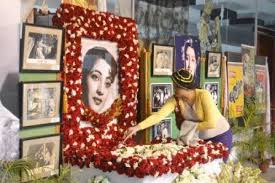
Prasanta Chakravarty It is indeed remarkable when a chief minister of a state gets a by-line in a leading newspaper, even if that is ghost written to a considerable degree. But it is not really unusual, if the CM claims to be an artist, poet and creative writer who is forever reaching out to the masses through her art as with her political skills and rhetorical acumen. Mamata Banerjee has written a full blown account of her interactions with Suchitra Sen in the last few days of the actor’s life in a superb political public relations exercise in a Bengali daily. It tells us more about the chief minister herself than about Ms. Sen. It also once again tells us about the political leader’s relationship with the very nature of the culture that she peddles and how she seeks to leverage that aspect in the public domain. Beyond Bengal, such moves also suggest something very important in Indian politics right now: the relationship that the so called post-ideological popular platforms have with the cultural front. The relationship of politics with popular iconography and sentiment is a fascinating realm. W. J. T. Mitchell has argued that we need to reckon with images not just as inert objects but as animated beings that exert a certain force in this world. The “complex field of visual reciprocity,” he writes, “is not merely a by-product of social reality but actively constitutive of it. Vision is as important as language in mediating social relations, and it is not reducible to language, to the sign, or to discourse. Pictures want equal rights with language, not to be turned into language.” In our country, the mobilization, and whipping up, of moral-nationalist ideals in the middle and lower middle classes has always been by working through popular schemes, festivals and other cultural fronts. We all know how the left has often used such cults of the popular for political ends. The nationalists, of course, thrive on belief systems of the popular. It is in this context that what Ms.Sen might represent in the Bengali psyche is heaven sent to the popular mass leadership, and the chief minister can ill afford let it go without re-fashioning it politically. It is a trend we have seen in recent times which will not go away in a hurry: to mobilize iconography around exemplary deaths. What does Ms. Sen represent, or what is being promoted as something she might represent, that makes it so significant? Two apparently divergent images jostle for primacy. On the one hand, here is someone who is sure of herself and her charms; is haughty, distant, capricious, humorous and deeply aware of her worth and esteem. It is an image of a surefooted worldly wise diva who made herself a recluse by choice, for her own needs. On the other hand, we also notice a seemingly contrary image of a god-fearing person in a spiritual quest—who decided, upon catachresis and eventual diksha, to eschew ‘greed’ and maintain an economy of minimalism and ‘poverty’ in her lifestyle—so we are told. In this mode she is no more a sexual being of flesh and blood to be coveted, or one who is desirous of material needs herself. Here is the grihi who is also capable of renunciation. And so here is a cocktail which is absolutely electrifying, begging to be successfully channelled by the mass leader and media houses to the people. And no one understands the power of this amorphous image better than the current Bengal chief minister. Seeing Is Believing The first thing that a populist leader likes to fathom is the religious and cultural aspirations of the hoi polloi, to gauge and work out methods in order to handle and whip up the potentials of lay spirituality. In this framework, it is extremely important to stress the psychological subtleties and interiority of the mass. And to simultaneously have a strong sense of the provincial and the everyday—sociologically speaking. Not ideology and theory, but a study of the practices and lifestyles of popular icons and figures needs to be done first and morphed into the aspirations of a people. It is therefore important, if a popular icon is be venerated and memorialized effectively , that the rituals and motifs about her be carefully collected, nurtured and crafted: from gossip, anecdotes, snippets, rumours, and of course, to make sure that there is a constant circulation of certain iconic moments from the diva or the saints’ works and life—the very basis of the aura—a rich amorphousness of her mystical iconicity. It might be misleading to argue for metaphors and imageries for social reality but if we can create a network of images around a particular icon, built by the media and the powers that be, and then locate these networks in the social experience of a population, it may reveal to us what politicos most deeply care about themselves and hope to justify to others through certain other lives and events. But a caveat is in order here: even as we try to understand these manoeuvres, we have to see them as insiders functioning within a baroque modern formulation and not merely critique the phenomenon from ideological, juridical or historicist points of view. That mode is impatient and a short cut. Elaborating on the word icon Saba Mahmood has reminded us that it refers not simply to an image but to a cluster of meanings that might suggest a persona, an authoritative presence, or even a shared imagination. In this view, the power of an icon lies in its capacity to allow an individual (or a community) to find him- or herself in a structure that has bearing on how one conducts oneself in this world. The term icon, she tells us, therefore pertains not just to images but to a form of relationality that binds the subject to an object or an imaginary. This is a communitarian definition of an icon that fits well with the popular-nationalist
Ingeborg Bachmann & Paul Celan: Herzzeit/Heart’s Time, A Correspondence

Paul Celan was born in 1920 in Bucovina, Romania. He became one of the most prominent 20th century poets. Celan committed suicide in Paris, in 1970, before turning 50. Ingeborg Bachmann was born in 1926 in Klagenfurt, Austria. She wrote poems, libretti, novels and is considered one of the most talented German – Austrian writers of the 20th century. Bachmann died in rather strange circumstances in a fire in Rome, in 1973. She was 47 years old. The love affair between Ingeborg Bachmann and Paul Celan constitutes one of the most dramatic chapters of literary history after 1945. The respective backgrounds of the lovers who came together in May 1948 in occupied Vienna could not have been more different: she, the philosophy student daughter of an early Austrian member of the NSDAP; he, a stateless German-speaking Jew from Czernowitz who had lost his parents in a concentration camp and was himself a survivor of a Romanian labour camp. It is from this irreconcilable difference that Paul Celan developed his role as a Jewish poet writing for German readers and his high standards for poetry in German after the Jewish catastrophe. For Ingeborg Bachmann, who had already confronted the most recent past of Germany and Austria, it became a new impulse – to spend her life fighting the danger to forget, and to champion Celan’s work. Both this difference and the striving to resume the dialogue – precisely because of that difference – characterize their letters, from the first gift of a poem in May/June 1948 to the last letter of 1967. Writing formed the focal point in the lives of both correspondents… For both, however, writing – including letter-writing – was no easy matter. The struggle for language and the conflict with the word assume a central role in the correspondence. Time and again, there are references to unsent letters: some of these were failures and hence discarded; some were kept, and appear between the others as documents of doubt… the phrase ‘You know’ [Du weisst or Du weisst ja] often stands in for a direct statement, and telegrams or short letters often promise longer letters, which do not always come… Silence, in some cases a source of torment for one of the two parties and in others maintained by a tacit agreement, is an important element throughout the six phases of their correspondence… Between the weeks spent together in Vienna and the last of the 196 documents – letters, postcards, telegrams, dedications and a page of conversation notes – these events are: Celan’s departure from Vienna to travel to Paris in June 1948; the meeting at the conference of Gruppe 47 in Niendorf (their last for several years); the resumption of the love affair after a conference in Wuppertal in October 1957; Bachmann’s encounter with Max Frisch in the summer of 1958; and, finally, the intensification of Celan’s mental crisis in late 1961 following the climax of the Goll affair, instigated by Yvan Goll’s widow with accusations of plagiarism. The first phase, the time of their encounter in Vienna, has a central document, Celan’s dedicatory poem, ‘In Agypten’. ‘Splendidly enough,’ writes Ingeborg Bachmann to her parents on 20th May 1948, ‘the surrealist poet Paul Celan’ has fallen in love with her. 3 days later Celan sends her this poem with a dedication (‘Vienna, 23 May 1948. To the meticulous one, 22 years after her birthday, From the unmeticulous one’) in a book of Matisse paintings. ———————————————————- ‘In Egypt’ For Ingeborg You should say to the eye of the strange woman: Be the water. You should find in the stranger’s eye those you know are in the water. You should bring them from the water: Ruth! Naomi! Miriam! You should adorn them when you lie with the stranger. You should adorn them with the cloudy hair of strangers. You should say to Ruth and Miriam and Naomi: Look, I’m sleeping with you! You should adorn the strange woman nearest you most beautifully. You should adorn her with sorrow for Ruth, for Miriam and Naomi. You should say to the stranger: Look, I slept with them! [translated by Stephen Lloyd Webber. http://stephenlloydwebber.com/2011/03/ten-translations-of-paul-celan-poems/] Letter from Bachmann to Celan, Vienna, Christmas 1948. NOT SENT. Dear, dear Paul! Yesterday and today I thought a great deal about you – or about us, if you will. I am not writing to you because I want you to write again, but because it gives me pleasure and because I want to. I had also planned to meet you somewhere in Paris very soon, but then my stupid and vain sense of duty kept me here and I did not leave. What does this mean anyway – ‘somewhere in Paris’? I don’t know anything, but I do think it would have been lovely somehow! Three months ago someone suddenly gave me your book of poems as a gift. I didn’t know it had come out. That was so… the ground was so light and buoyant beneath me, and my hand was trembling a little, just a very little bit. […] I still do not know what last spring meant. – You know me, I always want to know everything very precisely. – It was lovely – and so were the poems, and the poem we made together. Today you are dear to me and so present. That is what I want to tell you at all costs – I often neglected to do so during that time. I can come for a few days as soon as I have time. And would you want to see me? – One hour, or two. Much, much love! Yours Ingeborg Celan to Bachmann, Paris, 26 January 1949 Ingeborg, Try for a moment to forget that I was silent for so long and so insistently – I had a great deal of sorrow, more than my brother could take from me,
Wild Donkey’s Bray

Rana Roychowdhury —————————————————————– Rage I Have Veiled Rage I have veiled Cranes fly I see with binoculars Their whites flutter in the skies This janasamaj, medicines, bandage Blazing flowers, window concealed All this he had jotted down—in notepad after notepad Everybody on the T.V. is saying killing someone is a sin He had written about such a sin in Notepad after notepad— The dog’s mute stare he had written about And about boiling rice. ***** Now He Hangs As the Moon In the Sky Moon in the sky—tonight. This news the pristine girl brings to me This news the shadow of the adjoining door sets free All of us the neighbourhood gang Climb up to the rooftop. And see Truly moonlit it is, this sky and that awash. Right then someone in the crowd said: But that is not the moon! Heck no, that is the land grabber little Khude! And we all see now, indeed It’s that ruffian Khude, for whom the police Was on the lookout; right now in the sky He hangs as the moon. ***** Adda When Ramachandra left for the forest You got emotional and howled and wailed Right from that day we had decided That if we have to visit the forest Let there be occasional jungle safaris Treetop houses and no less Manas sanctuary, Kaziranga, at the least Gorumara (via Lataguri), for travel cars please contact Bappa Ganguly: Phone 9433425179 And if one is looking for a good, healthy cottage On the forest outskirts It must be Mithu Banerjee’s Now the question is whether Mithu Banerjee is a man or a woman? If she is a woman, we may decide (with alcohol and dancing adivasis in tandem) To inhabit the forest for 14 years It is our long standing wish to see copulating wild elephants. ***** Water Water Fills up the bucket Filled up bucket Makes me happy Water From the bucket Goes far away In this manner, everyday I fill up and get drained A world of water Revolves Around me ***** Playing Carrom The way the professorial couple plays carrom Is still beyond my ken. Especially the red. From distant districts Hopping trains, skipping vendors Prancing past the splendour of chanachur-lipstick-peanuts The professorial couple will make sure to gobble up the red. I think: those of us from Kalyani, Basirhat—till date those who With upright tables, vertical minds, childlike, play carrom— Red is our cherry toy. Our claim and our due. Our clear-cut poetry magazine. Look! There’s Shajal, just crossed the bridge to hit the red straight into the net. But the professorial couple nets it obliquely At an angle—winding down the Sahitya Akademi path via Banga Sammelan The red makes its way to the net. As if a bride’s hibiscus got stolen from the garden. No one knows the thief—blurred, he’s the yellow river bank. But in anthologies they dazzle and on the dais too In tea cups and in editorials— But they are no robbers, no killers, no. Famed carrom players merely. ***** Words Snake Touring around the house. Dread Touring around the house Thus touring dread Gets into the hole But if words Surface again? Then where shall I keep the poison? Then where shall I keep the pain? ***** Dreadlocks Tables and chairs Garnish this universe Pranayam and party-diktats Dress up this sandy shore The Tamil mad-women gave me this bit of news Lights from group theatre delivered to me this news Madwoman with livid liced dreadlocks Love-dining-table garnishes In the conifer-island lights blaze. Illness And dreadlocks unravel. Such power truth wields So much light today such guest-speak Shall I not stand in the line too? Marvel at the sky, galaxies! ***** Wild Donkey’s Bray How shall I call out? Moo woo? Or Bande Mataram? Better Inquilab Zindabad? Whining ruff arff? Or growling bow-wow? Snarl and roar shall I? All’s hushed—sunsan, silent-empty. Falling leaves in the sunsan. No man, won’t needle no pricking His brother’s younger sibling just bought by sweat No man, won’t prod no pricking I swear I won’t Beacon Tagore up there And Joy in my quill This restraint sees me through Restraint, winning party’s restraint. Hey Abhik, let’s dive under the train? “Nope, Ma waits with warm rice.” Hey Abhik, let’s enlist our names in the Maoist centre? “Nope, Ma still waits with warm rice.” So what? Be a corpse at the dinner table Tell Ma I’m your flower in the pot And I am your almanac, anthem, chorale Moss on your broken staircase— Look some bloody mangled meat; like London bridge has smashed My skull and character. If one dies unnaturally, at the end of maya and desire The soul orbits, turns round for two years at least Yes, it’s written loud and clear in Abhayananda’s “Beyond Death” That after death the soul doesn’t grasp That he is no more a poet, He thinks there is rain in the fire still. See, Abhik and I Evil spirits after death now, spirits of infirmity Banging doors, running about Pirgachha road Spotting lovers shall scream “Let us live, please let us…” Fuck your English speaking habit we will yell Utpalbabu has gone the Bosebabu way now From tree to higher tree barking aloud: ‘Cocaine Cocaine.’ Bullshit, that is never to be, that dream. Tut! Wild donkey is shaky and shy Can run faster than a mule Our table used to house ten wild donkeys Abhik and I slipped and fell Into your… oh dear… into your misery— And remember, Gopal at home means hassle aplenty Ministerial treatment, three meals a day Bath, scrubbing the lazy organ And Gopal can’t be left alone Still Gopal’s a darling pet. Harmless Gopal, no sex, no craving for fame Harmless Gopal won’t enlist in the CPM, and no suicide attempts too Vegan dish vegan wish Just make sure to pray thrice a day. But see, crafty