
Crows in the Mist

Parimal Bhattacharya ‘Most of the mango trees around our house were part of the family’s common property. Nobody had rights over the green fruits that dropped on their own, sometimes hit by a nor’wester, or the ripe ones that fell in the middle of the night; anyone could pick them up. Unnoticed, the mango flowers would blossom and one day aunt would open her fist to show a tiny green mango.’ This is from the autobiography of Manindra Gupta, a poet, as he remembers his childhood days in a village in erstwhile East Bengal. He then goes on to describe how they would run about in the mango orchard during a summer squall, amid the swaying branches and thunderclaps, as the green mangoes swung above their heads like trapeze artists until they snapped and fell. His aunt had a hunter’s alert ears. She could pick out the solitary thud of a dropped mango from the web of sounds of the nocturnal garden, could detect the noise of fruits falling in the bushes, upon hard earth or grass, or in the wet mud around the pond. Carrying a lantern, she would unfailingly reach the spot. In Bibhutibhushan Banerjee’s Pather Panchali, there is a passage where Apu and Durga go to a mango orchard during a thunderstorm. The scene is there in the Satyajit Ray movie based on the novel as well. There is another scene in the film where their mother Sarbojaya, rain drenched, stealthily picks a coconut from a neighbour’s garden. In countless stories and memoirs set in Bengal, divided and undivided, there are descriptions of green mangoes dropping during summer squalls, of coconuts dropping in ponds, of ripe palm fruits dropping in the somnolent heat of autumn afternoons. The thuds and plops of fruits dropping on the green, fecund earth of Bengal have echoed in the collective memory of generations of Bengalis. It did not fade even after the Partition and the exile that followed, but continued through the rattle of tramcars, the patter of typewriters and the wail of the mills’ sirens. The same thuds and plops echoing in the memory could even block out the sounds of skeletal men and women dropping dead on the footpaths of Calcutta during the great Bengal famine of 1943. In the late 1960s, another sound was added to the acoustic memory of Calcuttans: that of youthful human bodies dropping on the Maidan, the wide parade ground in the heart of the city. Falling on the dew-wet grass at dawn, those sounds almost perfectly replicated the thud and plop of fruits dropping before their time. Just before that one would hear, like an approaching nor’wester, the rumble of police vans, followed by the groan of a door opening, the swish of running feet on wet grass, the whistle of a rifle, and then …One couldn’t see much in the thick, early morning mist; one could only hear. The mist, laced with wisps of grey diesel fume that hung in the air through the night, had begun to dissipate with the first rays of the sun, and was now whisked up by a man running through it, like a paintbrush on wet canvas. A silence would descend as the gunshot scared off a colony of birds on the trees by the Red Road. After the police van would leave, a slow breeze would begin to blow from the direction of the river. The bronze fairy atop the Victoria Memorial still revolved in those days; a keen ear would pick out the faint metallic whirr in the stillness of the morning. Soon the crows would appear… ————————————- Parimal Bhattacharya is a Bengali writer whose books include Darjeeling: Smriti Samaj Itihas and Satyi Rupkatha – Odishar Ek Upajaatir Jibansangram. This is an excerpt from Dyanchinama. [Translation: Parimal Bhattacharya.] adminhumanitiesunderground.org
An Animal, A Night, A Scream

Constant Nieuwenhuys [Constant Nieuwenhuys (1920-2005), the Dutch painter, sculptor, graphic artist, author, musician and architect, along with Asger Jorn, initiated the avant-garde art movement CoBrA (1948-51). In July 1948 Constant founded Reflex, Experimentele Groep in Holland with Karl Appel, Corneille and his brother Jan Nieuwenhuys. For Constant, art had to be experimental. He had deducted this from the French word ‘expérience’ and believe that art springs from experience of the artist and is continuously changing. The first edition of the magazine Reflex was published with a manifesto written by Constant (Reflex # 1-September/October, 1948).This manifesto would become one of the most important texts on art in the Netherlands after WWII. In this manifesto he states that firstly the process of creation is more important to the experimental artist than the work itself. HUG reproduces the Manifesto in anticipation of the impending publication of Henre Lefevbre’s hitherto unpublished work in any language: Toward An Architecture of Enjoyment (trans. Robert Bonnono, University of Minnesota Press, forthcoming June, 2014). Lefevbre was closely connected to Constant and Asger Jorn, and like them, made asceticism his prime target of critique, which they all detected in bourgeois morality, capitalist accumulation, modernist aesthetics, structuralist epistemology, bureaucratic governance, and the political imaginary of the communist Left. All plates by Constant Nieuwenhuys] ————————— Translated by Leonard Bright The dissolution of Western Classical culture is a phenomenon that can be understood only against the background of a social evolution which can end in the total collapse of a principle of society thousands of years old and its replacement by a system whose laws are based on the immediate demands of human vitality. The influence the ruling classes have wielded over the creative consciousness in history has reduced art to an increasingly dependent position, until finally the real psychic function of that art was attainable only for a few spirits of genius who in their frustration and after a long struggle were able to break out of the conventions of form and rediscover the basic principles of all creative activity. Together with the class society from which it emerged, this culture of the individual is faced by destruction too, as the former’s institutions, kept alive artificially, offer no further opportunities for the creative imagination and only impede the free expression of human vitality. All the isms so typical of the last fifty years of art history represent so many attempts to bring new life to this culture and to adapt its aesthetic to the barren ground of its social environment. Modern art, suffering from a permanent tendency to the constructive, an obsession with objectivity (brought on by the disease that has destroyed our speculative-idealizing culture), stands isolated and powerless in a society which seems bent on its own destruction. As the extension of a style created for the social elite, with the disappearance of that elite modern art has lost its social justification and is confronted only by the criticism formulated by a clique of connoisseurs and amateurs. Western art, once the celebrator of emperors and popes, turned to serve the newly powerful bourgeoisie, becoming an instrument of the glorification of bourgeois ideals. Now that these ideals have become a fiction with the disappearance of their economic base, a new era is upon us, in which the matrix of cultural conventions loses its significance and a new freedom can be won from the most primary source of life. But, just as with a social revolution, this spiritual revolution cannot be enticed without conflict. Stubbornly the bourgeois mind clutches on its aesthetic ideal and in a last, desperate effort employs all its wiles to convert the indifferent masses to the same belief. Taking advantage of the general lack of interest, suggestions are made of a special social needs for what is referred to as ‘an ideal of beauty,’ all designed to prevent the flowering of a new, conflicting sense of beauty which emerges from the vital emotions. As early as the end of World War I the Dada movement tried by violent means to break away from the old ideal of beauty. Although the movement concentrated increasingly on the political arena, as the artists involved perceived that their struggle for freedom brought them into conflict with the laws that formed the very foundations of society, the vital power released by this confrontation also stimulated the birth of a new artistic vision. In 1924 the Surrealist Manifesto appeared, revealing a hitherto hidden creative impulse – it seemed that a new source of inspiration had been discovered. But Breton’s movement suffocated in its own intellectualism, without ever converting its basic principle into a tangible value. For Surrealism was an art of ideas and as such also infected by the disease of past class culture, while the movement failed to destroy the values this culture proclaimed in its own justification. It is precisely this act of destruction that forms the key to the liberation of the human spirit from passivity. It is the basic precondition for the flowering of a people’s art that encompasses everyone. The general social impotence, the passivity of the masses, are an indication of the brakes that cultural norms apply to the natural expression of the forces of life. For the satisfaction of this primitive need for vital expression is the driving force of life, the cure for every form of vital weakness. It transforms art into a power for spiritual health. As such it is the property of all and for this reason every limitation that reduces art to the reserve of a small group of specialists, connoisseurs, and virtuosi must be removed. But this people’s art is not an art that necessarily conforms to the norms set by the people, for they expect what they were brought up they with, unless they have had the opportunity to experience something different. In other words, unless the people themselves are actively involved in the making of art. A people art is a form of expression nourished only by a natural and therefore general urge to expression. Instead
Symbol
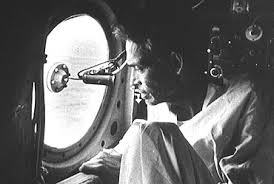
Ritwik Kumar Ghatak Symbol—what we call prateek in Bangla. The thing is the fruit of proliferating human thinking and meditation. These days, I feel, its behaviour and movements have also had an enormous impact on the creaturely and animal world. So, it is natural that in every human art-form it will occupy a major place. One of the main reasons for this is that this thing called art, on its own, desires such a thing called symbol. It gravitates towards it. Let me explain. How is art born? All art is born from the labour that is generated to cater to all kinds of human wish-fulfilment. The earliest of the art forms about which we have heard are in those well know cave paintings, say, in Altamira, Lacaux orFreyja. At that time the most primitive humans, who lived in Europe during the Palaeolithic Age, would collectively hunt the beast called the Mammoth and with various body-parts would garner food, raiment, source of light and even weaponry. Now, as these primitive humans developed a sense of the magical, the magus-wizard arrived, divined and decreed that if they drew a mammoth and pierce its heart with a spear, they would be successful in hunting down those beasts in the real world. So, art is hardly for art’s sake. It is for the stomach. If we try to hunt the source of primitive music, the story would be similar. There was primitive communism in the earliest phase of human existence—a collective, kaumi and goshti way of living. If you work together—if collective muscles work in unison to pull an object or push it or lift or put it down—the whole exercise becomes that much easier. And from that comes rhythm. The plumbers and coolies who open up the manholes and fit pipes and so on, come up with Hneiyyo Ho—it’s totally the same impulse. And the whole thing gradually turns into an energetic, inspirational effort in unison. That is to say, in order to extract more work from this class of people more words and expressions sneak in. One can trace here the source of our earliest songs and poetry. The creation and evolution of our musical instruments also owe much to human work. Labour and art have a placental connection. So, does art mean all expressions and painting equivalent to labour, then? Not at all. There comes a stage when you do give into some idiosyncratic excess—a mad man’s mind plays with this idea. He is vexed that the thing is not shaping well. May be something should be added, something extra? Thus starts the crazy endeavours of the madman. After completing fully the demands of his primary work, he gets a breathing spell to add some deft touch, a hint of colour here, a note there and some preternatural expression at some point by dint of which the whole thing finds illumination, one might say. The primitive man,at this point, with a gaping mouth, looks at his own art-work and exclaims: bah ! This is how art begins its journey, its shubho-jatra. From now on man would begin to take this thing called symbol into his own hands. So, what is a symbol? So many people over the years have explained it in so many different ways and the whole thing has therefore become so terribly entangled that it is difficult to explain it simply. But let me try and give you an inkling about the initial stages. The collective fund of human memory, right from prehistoric times, gets accumulated in that section of the brain which we call the collective unconscious. This thing called collective unconscious is no one’s inherited paternal booty! The entire human society is its rightful heir. And why human society! As I have said, even in the creaturely world one notices manifestations of the unconscious. Scientists are at it with their experiments and laboratory work. The kernel of this unconscious lies in the extraction of the creative impulse through millions of years of human traversing. At certain special moments, during some singular events this kernel flashes upon the mind and then disappears just as fast—trying to measure this phenomenon in terms of causal logic will yield no result whatsoever. For centuries this has sent thoughtful people, scholars, scientists, spiritual leaders, wanderers and poets thinking. Its manifestation is happening all around us, in all places and often unnoticed and unmarked by us. Let me give an example. Certain artistic paradigms often spring forth and illuminate our brain.Such pictures or paradigms we do not see or sense in our daily encounters and surroundings or have not even encountered in the immediate past. In some form or the other at every location such images take shape and turn real. They will always be part of our existence. For instance, the trinayanimurti— the three-eyed icon—which appears to us both in benevolent and in destructive manifestations. Like, say, in the European imagination. Scandinavian and Icelandic kids, especially, know and live the three-eyed witch and the three-eyed bloodsucking bat/vampire through their sagas and tales. And that particular line of the Aryans which is known as the Indo-Iranian is replete with three-eyed gods and goddesses, especially benevolent ones. But do we encounter such three-eyed images in our daily life so easily? It is now, after intense research, that we have come to know that when the enormous reptiles and prehistoric beasts were becoming extinct and when newer species like Pterodactyl and such animals and birds were coming into being, the ones which were really fearsome were endowed with three eyes. In case you are interested in reading a good book onthis subject, you may like to begin with George Thomson’s The Icelandic Saga. Human beings had just come into existence. Now, humans must have had witnessed such creatures as death itself, in their full majesty, and so in order to propitiate such messengers of death, they would worship these creatures and create rituals around them and so on. Those horrific
The Final Womb: A Script

Falguni Roy [Falguni Roy, poet and visionary— one of the rarest of rare voices from the subcontinent, died at the unripe age of 33 in May, 1981. HUG thanks Abhisek Chakraborty for collecting his work along with allied and contemporary writings in the same tradition—in the February 2014 volume of the magazine Eksho Ashi Degree. Here is a sample. Translation: HUG. A short film about Roy, Ebang Falguni (The Lost Lines Of A Beauty Monster), was made in 2004. It was produced by Subhankar Das and directed by Sharmi Pandey.] ——————————————- [I am having an urge to say a few things about the womb actually the way words tend not to distinguish the scents of foreign or home-grown words within a living language like we do not remember while replacing frames for our glasses that frame is an English word so also in real writing as it gets peopled by and through living creatures the idea of writing itself becomes irrelevant at that point and when non-imagistic art poetry literature come closer to god and spirit they get closer to non-imagistic film as if life is a running film one forgets that the creator is unmoved indifferent the medium itself gets a life of its own and things get vitalized vivified.] Shot One: A raging pyre—around which a bevy of beautiful and ugly looking naked young women—their eyes brimming with tears. Shot Two: A Neem tree—full-moon beams dripping though its leaves. Shot Three: The blazing flames look upward to the sky and the naked young women with brimming eyes look downward to the ground—freeze. Shot Four: In several of the branches of the Neem tree hang a few men by the rope with no hands or legs but in each of their phallic regions there is a television set—beneath their hanging bodies that raging pyre and those naked women with their eyes welling and above those dead bodies through the Neem leaves drip full-moon beams. Shot Five: The naked women together start ululating and at that point from each of their vaginal regions appears an unfertilized foetus—like balls they plop to the ground—the women’s faces contort with pain—they keen. Shot Six: The television sets on the hanging male bodies begin to roll. On one of the sets one sees a man copulating with another and those naked women cackling at each other at the sight. On another set a naked woman pleasures herself, moaning, and a man pierces her bosom with a sharp knife and the woman shrieks. On another TV an elderly woman is copulating with a dog and her old husband with his face hidden on the knees of a little girl is crying inconsolably. Shot Seven: The naked women are picking up the fallen unfertilized foetuses from the ground and their eyes are now drying up and the retinal dots within their eyes begin to burst and as their eyes and face are awash with blood the difference between beauty and ugliness vanish. Shot Eight: A raging pyre—a branch of the Neem tree over the pyre—men hanging by the rope on the branch—television sets on their phallic region and the following words appear on each television set— We want food clothes a place to stay We want women poetry We want alcohol pure and pungent Art our happiness Literature our alcohol Our alcohol the feeling of hunger Shot Nine: The naked women face the pyre and in unison say this—We do not want theory we want bodies we just want bodies and theories about bodies. Their faces awash in blood from their gouged eyes and in their hands the dropped unfertilized foetuses—in their vaginal region bloom abundant flowers—a profusion of flowers their colourful vaginas. Shot Ten: A road—a gate at the end of the road—carved on the gate—Maternity Home – and on the far side, another gate which says—Burning Ghat— A twosome—manush and manushi, on the road Manush revolves around his manushi Manush interrogates his manushi Manushi interrogates her manush Manush replies But no one speaks only makes gestures No one speaks save the eyes Shot Eleven: This picture is getting projected on the television sets in the phallic regions of the hanging dead-bodies with no hand or legs. On one of the TV sets a huge family planning poster beneath which sit those manush-manushi and in their laps 3 babies—they cry. On another TV set excited manush—his greying hair, advancing age, manushi’s greying hair and advancing age too but a quiet, naked kid in front of them and manushi with her hands on the penis of the kid petting him and the excited manush trying to smash and smash a pair of spectacles with a fat looking fountain pen. On another TV manushi’s body is turned into a skeleton—only the eyes are animated burning and tears flowing freely and manush is blind now and his body leprosy stricken—their child, a full grown man with breasts like women long hair like women, and manush walk gingerly and manushi pets his phallus—and both say this— Give love back to us Give love back to us And their womanly-man child stare at the sky, nervous agitated—not one beard on his cheek—like women his eyes nose lips are shaped Shot Twelve: A sole full-moon in the sky— Shot Thirteen: All around the pyre the naked women and in every lap unfertilized foetuses plopped out from the wombs and in every vaginal region multicoloured flowers and every eye tear-filled and everyone chants again— Give love back to us Give love back to us adminhumanitiesunderground.org