
The Diva & the Minister
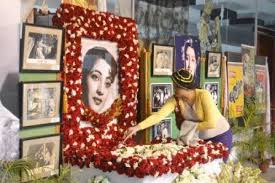
Prasanta Chakravarty It is indeed remarkable when a chief minister of a state gets a by-line in a leading newspaper, even if that is ghost written to a considerable degree. But it is not really unusual, if the CM claims to be an artist, poet and creative writer who is forever reaching out to the masses through her art as with her political skills and rhetorical acumen. Mamata Banerjee has written a full blown account of her interactions with Suchitra Sen in the last few days of the actor’s life in a superb political public relations exercise in a Bengali daily. It tells us more about the chief minister herself than about Ms. Sen. It also once again tells us about the political leader’s relationship with the very nature of the culture that she peddles and how she seeks to leverage that aspect in the public domain. Beyond Bengal, such moves also suggest something very important in Indian politics right now: the relationship that the so called post-ideological popular platforms have with the cultural front. The relationship of politics with popular iconography and sentiment is a fascinating realm. W. J. T. Mitchell has argued that we need to reckon with images not just as inert objects but as animated beings that exert a certain force in this world. The “complex field of visual reciprocity,” he writes, “is not merely a by-product of social reality but actively constitutive of it. Vision is as important as language in mediating social relations, and it is not reducible to language, to the sign, or to discourse. Pictures want equal rights with language, not to be turned into language.” In our country, the mobilization, and whipping up, of moral-nationalist ideals in the middle and lower middle classes has always been by working through popular schemes, festivals and other cultural fronts. We all know how the left has often used such cults of the popular for political ends. The nationalists, of course, thrive on belief systems of the popular. It is in this context that what Ms.Sen might represent in the Bengali psyche is heaven sent to the popular mass leadership, and the chief minister can ill afford let it go without re-fashioning it politically. It is a trend we have seen in recent times which will not go away in a hurry: to mobilize iconography around exemplary deaths. What does Ms. Sen represent, or what is being promoted as something she might represent, that makes it so significant? Two apparently divergent images jostle for primacy. On the one hand, here is someone who is sure of herself and her charms; is haughty, distant, capricious, humorous and deeply aware of her worth and esteem. It is an image of a surefooted worldly wise diva who made herself a recluse by choice, for her own needs. On the other hand, we also notice a seemingly contrary image of a god-fearing person in a spiritual quest—who decided, upon catachresis and eventual diksha, to eschew ‘greed’ and maintain an economy of minimalism and ‘poverty’ in her lifestyle—so we are told. In this mode she is no more a sexual being of flesh and blood to be coveted, or one who is desirous of material needs herself. Here is the grihi who is also capable of renunciation. And so here is a cocktail which is absolutely electrifying, begging to be successfully channelled by the mass leader and media houses to the people. And no one understands the power of this amorphous image better than the current Bengal chief minister. Seeing Is Believing The first thing that a populist leader likes to fathom is the religious and cultural aspirations of the hoi polloi, to gauge and work out methods in order to handle and whip up the potentials of lay spirituality. In this framework, it is extremely important to stress the psychological subtleties and interiority of the mass. And to simultaneously have a strong sense of the provincial and the everyday—sociologically speaking. Not ideology and theory, but a study of the practices and lifestyles of popular icons and figures needs to be done first and morphed into the aspirations of a people. It is therefore important, if a popular icon is be venerated and memorialized effectively , that the rituals and motifs about her be carefully collected, nurtured and crafted: from gossip, anecdotes, snippets, rumours, and of course, to make sure that there is a constant circulation of certain iconic moments from the diva or the saints’ works and life—the very basis of the aura—a rich amorphousness of her mystical iconicity. It might be misleading to argue for metaphors and imageries for social reality but if we can create a network of images around a particular icon, built by the media and the powers that be, and then locate these networks in the social experience of a population, it may reveal to us what politicos most deeply care about themselves and hope to justify to others through certain other lives and events. But a caveat is in order here: even as we try to understand these manoeuvres, we have to see them as insiders functioning within a baroque modern formulation and not merely critique the phenomenon from ideological, juridical or historicist points of view. That mode is impatient and a short cut. Elaborating on the word icon Saba Mahmood has reminded us that it refers not simply to an image but to a cluster of meanings that might suggest a persona, an authoritative presence, or even a shared imagination. In this view, the power of an icon lies in its capacity to allow an individual (or a community) to find him- or herself in a structure that has bearing on how one conducts oneself in this world. The term icon, she tells us, therefore pertains not just to images but to a form of relationality that binds the subject to an object or an imaginary. This is a communitarian definition of an icon that fits well with the popular-nationalist
The Loss of Wor(l)ds: Theatre in Manipur and Heisnam Kanhailal

Trina Nileena Banerjee “The child, I looked at the new born child crying. I noticed that the whole body of the child cries. But actors only use a certain resonator. Actors do this because we are socially and culturally conditioned. […] what we need is the creation of a new body culture…” —-Heisnam Kanhailal, interview with Naveen Kishore and Biren Das Sharma for the Seagull Theatre Quarterly in January, 1996.[i] —————— During a recent student production staged with much fanfare in a reputed auditorium in New Delhi, the audience (consisting mostly of young, elite college students) broke into peals of laughter every time the multilingual actors spoke in Tamil or Meithei, but watched courteously enough when English or Hindi was spoken on stage. Watching the audience as much as I was watching the actors on stage, I begun thinking of what, if anything, had changed from the time when, many decades ago, in 1963, Kanhailal Heisnam had been expelled from the National School of Drama on for having taken leave without official permission. The real problem, according to scholars like Rustom Bharucha (who studies Kanhailal’s theatre in exhaustive detail in his book The Theatre of Kanhailal), [ii] was Kanhailal’s inability to cope with the pressure of being expected to speak, write and work in English and especially in Hindi. These were languages that were unfamiliar and alien to him, just as he was alien in the space where he had arrived, albeit with much hope and optimism, as a student of theatre. Having been expelled, after a period of aimlessness, Kanhailal returned to Imphal finally in 1969 to begin his own work and established his theatre group Kalakshetra Manipur. However, unlike the far-more spectacular Ratan Thiyam, who even went on briefly to become the director of NSD in 1987-1988, Kanhailal remained for a long time on the margins of what was accepted and celebrated as ‘Manipuri ‘theatre practice at the nation’s centre. As a student of Kanhailal’s work, one is tempted to trace his special relationship to language and his long-lasting rejection of ‘words’ as an effective medium for theatrical communication, to this early experience of linguistic exclusion in the nation’s capital. Kanhailal’s experience is significant precisely because it is not merely personal; it is significant in that it can stand as emblematic of the systematic and enduring political, cultural and linguistic exclusion of the North Eastern states from the mainstream cultural history of India. The terms of cultural ‘participation’ are handed down from above; the inability and (god forbid) the choice not to participate might end in ridicule, failure and ostracisation. Kalakshetra Manipur, by the very nature of its austere premises situated at the outer-most limits of Imphal (at the foot of the hills that encircle the Manipur valley) seems to have quietly celebrated, over the many years since its inception, this position of silence and liminality as a source of strength, creativity and resilience. Kanhailal writes of his training process: “Believing in the autonomy of theatre, we swallowed the text and absorbed it into our body instead of speaking out the lines through lip movement, facial and finger gestures. We shattered the whole network of illusion on the stage. We were no longer burdened with the heavy light, costume and make-up. We cleaned the stage as an empty space where we began to unfold the autonomy of theatre…”[iii] However, rather than being the inward-turning process that it seems to imply, this methodical minimalism resulted in several interesting experiments by the director in the late 1970s and early 1980s. He stepped out of mainstream proscenium theatre practice to work with untrained villagers in distant areas of Manipur and market women from the famous Nupi Keithel (women’s market) of Imphal. Kanhailal was deeply influenced, according to his own admission and that of scholars like Lokendra Arambam, by the event of Badal’s Sircar’s visit to Imphal in 1973. Sircar staged his production Ebong Indrajit, and this was followed by a workshop production of Spartacus that Sircar staged with various young directors and theatre workers of Imphal. It provided the practitioners a window into a theatre aesthetics completely different from the traditional grammars of Manipuri performance practice. The young Kanhailal was so struck by Sircar’s method that he followed him to Calcutta and spent a considerable amount of time learning from him, watching him closely. He writes of the period: “Badal-da helped me very much. I give him the respect of a guru. When I worked with him I could not fully grasp his concepts. But as human beings, we learn from our experiences, don’t we? I learnt through all these experiences, the meaning came later.”[iv] Perhaps Kanhailal arrived at the meaning, several years later, while working with the seventy working-class women in the central women’s market of Imphal. In the winter of 1978, he fashioned a theatrical event called Nupi Lan (Women’s War), based partly on the history of women’s struggles and political resistance in Manipur since the late nineteenth century. The ‘market women’ of Imphal are referred to frequently in all important studies of Manipuri society, politics, history and culture. In Manipur, almost all trading activity is traditionally controlled by women and there are bazaars in Imphal that are run entirely by women. It is conventionally considered bad form for men to frequent these bazaars. Both buying and selling activities in these market spaces are conducted mostly by women. Imphal’s largest and most central market, called Khwairamban bazaar, is also operated completely by women. Women from villages all around Imphal travel to this market everyday to sell their agricultural produce. This Khwairamban market is also known as the Ima market (the market run by mothers) or the Nupi Keithel (women’s market). The history of the two ‘Women’s Wars’ or Nupi Lan in colonial times is associated almost entirely with the women’s market. These wars were waged, on both occasions, by the ‘market women’ against the policies and orders of the colonial administration, the first in 1904
Gay For More Than A Day Of Rage

Brinda Bose Since ‘straight’ is linguistic harakiri for 377-talk, perhaps we first need to get this crooked: if we say ‘we are all queer’, we cannot make a ‘they’ out of the LGBT community, and more importantly out of all that which 377 targets, ‘carnal intercourse against the order of nature’. We must first understand what ‘nature’ means in the context of carnal intercourse, of course, but most crucially we must believe that being queer is a philosophy and a politics and a sensibility of desiring outside the pale of proscription. And it is also today a politics and a philosophy of protest and dissent: an assertion of our sexual selves that are denied existence by others, but in tandem, always, a celebration of those very selves – continued, secret or outed, extravagant or quiet – despite such denials and exclusions. Queer Desire: Raging, Carnivalesque ‘We are all queer’ as a movement is in league with (and not opposed to or lesser than) other battles against discrimination, like that of dalits or Kashmiri Muslims or transgenders or working class labourers. Anyone who dismisses the fight against 377 as lower on the rungs of political significance is astonishingly classist and casteist in such an argument, surely? And to say that, since only 200 ‘offenders’ have been booked in 150 years of the existence of section 377 of the IPC, this makes it any less critical to understandings of identitarian politics is to be the worst kind of offender in hierarchizing identities, it seems to me. So here then is a ‘gay’ – and we can all be gay as much as queer – that must necessarily be both a blithe spirit and an angered, avenging one. It must fight for spaces as much as mark its presence outside of legitimately-granted territories, because its very definition is to be outside of the prescribed, and to be in combat for a place that it does not really wish to seek under its contrarian sun. And so this queering must be raging and carnivalesque at once, a gay that protests, resists, rebels, chooses, loves, desires, kisses, caresses, copulates, orgasms – in whatever way it ‘wants’ the other, simply and yet complicatedly being propelled to bodily pleasure and passion by sexual urges, oblivious to what the law allows or does not. And let us be clear on this, the fight against Section 377 is not about a sloppy sentimental ‘love’ that de-fuses hate all over the world: it is about searing passionate romance, and the right to sexual practices impelled by raucous lusty desires that are seen as dangerous to the moral fabric of the nation-state – those that are legally disallowed, but not privately disavowed. It is about love all right, but it is a risky, risqué love that dares and bares and gives and takes with everything it’s got. Why is it crucial to make distinctions between loves when all are difficult enough, Calvino might ask. Then consider this: surely the BJP too thinks that love is not a crime when indulged in glorious saas-bahu technicolor, even while it renounces homosexuality in the morning’s headlines? It is imperative, therefore, to distinguish between a love that decimates romance and passion and makes of it a duty and a sacrifice and an aspiration to a higher, saintlier plane of being and living, and one that is passionate in giving and much as taking, an erotics of pleasure-soaked romantic love. Desire – the kind we are fighting for – is an overreacher, always wanting something beyond what we are allowed to possess; Lauren Berlant’s ‘cruel optimism’ and Jacques Ranciere’s ‘cruel radiance’ (though neither used it in exactly this context), where the oxymoronic nature of any exercise of will and wish is emphasized, may work well to focus both the sharpness and the ambiguity of desiring processes, sexuality being no exception to this melding of potentially-contradictory impulses. Desire is a choice one makes, individual liberty may guarantee the exercising of that choice – but desire also exists beyond all guarantees, it goes where liberty – or liberality – fears to tread. This is one critical aspect of the battle against 377 we cannot afford to lose sight of, that the battle itself is contradictory, it is looking to legitimize a space that is by its very ethics (and I use the term advisedly) against the ‘order of nature’ and all that is legitimized by such ‘nature’ in the way the Court has read it. That is the real reason for it being a fraught battle even within so many of us who wish to identify as queer – whether LGBT or H(etero) – and we must begin by acknowledging and dealing with this fraughtness – or this queerness, if we will. Everyone who has ever indulged in any sex outside the penile-vaginal straitjacket (and that includes masturbation) can, within the legalese of the Indian Penal Code, be incarcerated for a criminal offense under 377. This IPC section in the news now may have been framed in British colonial times but was accepted and legitimized by Nehru and Ambedkar when power transferred back to native hands, and we cannot afford to forget that. And the Supreme Court may well say today that it is merely upholding the spirit of the founding fathers of our nation who in their wisdom did not think it necessary to throw out what the British had imposed on the subcontinent. And so the Supreme Court of India’s failure to uphold Delhi High Court’s 2009 landmark reading-down of the offending sections of Section 377 about ‘carnal intercourse against the order of nature’ damns not just the LGBT community which we belong to or support, but just about each and every one of us in our politics, philosophies, agentic actions, dreams and fantasies, as it also damns our first nation-builders whom we invoke in all our incantations of freedom and glory. ‘Reading Down’ Liberty and Progressive Divisiveness One of the astute ways
Why Classics?

Utpal Dutt Snobs have always been contemptuous (over their morning cups of coffee, if you please) of the non-professional theatre groups in the city who are modestly building up a movement. Slogan-mongering, puerile, Communist, un-Indian—they have used many such odd epithets. So far, perhaps, they have had a ground—we have been busy too long making theatre a living newspaper and we had reasons for it. But we have also been guilty of neglecting the past, of scoffing at it with silly phrases borrowed from our smattering of Left literature. But now we can throw down the gauntlet. One group is rescuing Tagore from the emasculating chauvism of Santiniketan; another is rediscovering forgotten classics of the nineteenth century; a third bringing you Shudraka’s masterpiece. The classics belong to us and we alone can interpret them for the modern audience. Shorn of the classics, a modern repertoire becomes shorn of tradition, rootless and empty. For, the greatest experiment consists in carrying tradition forward, not in denying it; in interpreting and moulding it for our epoch, not in rejecting it as old. Moreover, the classics give us elemental noble passions that are wanting in contemporary drama. As Robert Jones once said in disgust, “Modern drama has been reduced to conversation about whether egg is hard-boiled or not.” There is a tendency in the name of revivalism to compress the emotions of men and women into the trivialities of breakfast and dinner. The dramatists are busy imitating probable conversation: what would such a character caught in such a situation say if he were real? The result—not even a fraction of complex modern life finds expression in theatre. Life is not just conversation and behaviour, but thought, emotion, passion. Desperate attempts have been made all over the world to capture on stage these other great aspects of life. Tagore heightened his drama from the real to the allegorical. Toller poetized the struggle of the working class. O’Neill’s Strange Interlude (1928) introduces inner voices of the characters. Brecht tried the epic style with modern themes. Eliot wrote Shakespearean verse about cocktail parties. But most of this expressionist and poetic drama has failed; it has become mere jugglery with forms. It has not the simplicity of the classics. Why is this so? Because theatre has abandoned its conventions. There was a time when the theatre was all convention. The Chorus introduced the play; the king’s chariot was imaginary; Vasantasena’s lavish villa was described purely through the spoken word; so was Cleopatra’s voyage down the Nile, and the death of Ophelia. There was a time when the actor soliloquized and gave us a glimpse into his soul and not only into his behaviour. What after all is the value of the opera-bouffeish murder of Duncan without the beautiful revelation of a man’s soul in ‘Is this a dagger?’ speech? Hamlet would be a typical Renaissance melodrama of intrigue, murder, ghost, duel, suicide and four corpses to bring the curtain down, except for the soliloquies, the conflicts within a thinker, his struggles with himself, which tone down the horror and give the frantic incidents a new meaning. The Chinese tragedian entered the stage and immediately introduced himself and his problems to the audiences. The Japanese stage manager in black freely walked around on the stage, prompting and helping the actors. But in 1840 a man called David Hill invented the photograph, and soon after, the disease of realism gripped the theatre in Europe. And now the Bengali theatre has caught it too. In this country of picturesque gesture and musical language, the dramatists are busy limiting the actor to the appearances of life, immobility and prosaic how-do-do’s. Would you believe this is the country where the Jatra developed—Jatra, which relies entirely on blank verse and sweeping gesture? Would you believe that Girish Ghosh wrote his Pandab Gaurab (The Glory of the Pandavas, 1900) and Kshirodeprasad his Bhishma (1913)? The playwright today is afraid to philosophize, whereas his predecessor could dare to write in dramatic form a full-fledged treatise on the essential loneliness of man, to express through Bhishma the philosophy of individualism. Thus, the classics teach us to heighten events from merely a photograph to a full painted canvas. They recapture for us the language of theatre. They show us the methods whereby we may so handle a modern theme that will surprise with a fine excess; it will awe, astound, ennoble. Behind the humdrum incidents of daily life, it will capture the soul of man. —————————————————— adminhumanitiesunderground.org